Long Poker Sessions and the Discipline
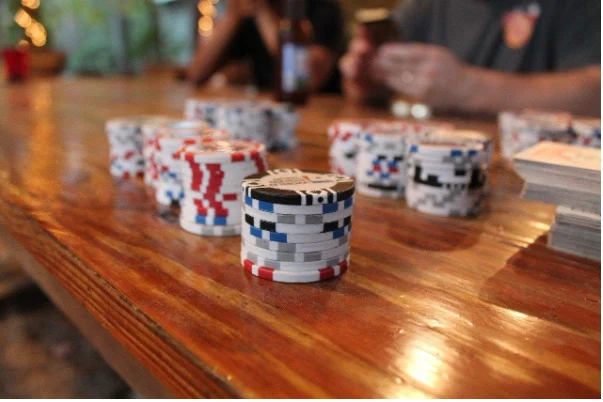
Fatigue research shows alertness holds for about 16 hours, then declines steadily. Here is what that means for long poker sessions and how to plan around it.
The Seventeen Hour Tell
Alertness does not drain steadily from the moment you wake. It holds reasonably flat for around 16 hours, supported by the interaction between the circadian pacemaker and the sleep homeostat, then drops away with real pace. That mechanism is set out in a review by Shantha Rajaratnam, Mark Howard and Ron Grunstein published in the Medical Journal of Australia in October 2013.
Drew Dawson and Kathryn Reid, then at the Centre for Sleep Research at the University of South Australia, put a slope on it. In a study published in Nature in July 1997, performance between the 10th and 26th hour awake fell by roughly 0.74% per hour. Less than one percent an hour. It is a gradient, not a cliff, and that is exactly why it slips past players.
Many players already track this without naming it. The late-session drift gets called running bad, getting card dead, or the table turning. Some of it is variance. Some of it is the eleventh to sixteenth hour of that gradient showing up in calling frequencies and bet sizing. Once it is treated as a curve with a known shape rather than a mood that descends, it becomes something a session can be built around.
Why Australian Players Recognise the Feeling
Australia has a large night-time workforce, so the experience of performing while tired is familiar to many people well beyond poker. The Melbourne Centre for Cities at the University of Melbourne reviewed the available evidence in June 2024. Its figures are worth sitting with:
- 1.06 million people worked in Australia's core night-time economy in 2021/22, a count the authors describe as deliberately conservative
- Time-use data records 20.1% of Australians aged 15 and over working between 6pm and 7pm, against 1.6% between 2am and 3am
- Healthcare, accommodation and food services, and retail each account for more than 200,000 night workers
- Between 8pm and 9pm, more people reported working from home than at a workplace, 15% against 13%
Long-shift work and long poker sessions run the same experiment on judgement, but only one of them gives immediate results. A nurse who makes a marginally worse call at 4am usually never finds out it was marginally worse. A player who makes a marginally worse call at 4am learns within about 30 seconds and can pull the hand history apart the next morning. That makes poker an unusually honest mirror for anyone who works late for a living, though most players only spot the drop-off afterwards, staring at a hand they would not have played at 9pm.
What Your Tracker Misses
If the effect is that predictable, surely a watch or a sleep tracker can flag it. Mostly it can. Not entirely.
Researchers at Flinders University ran 24 participants through an eight-day simulated shift protocol, testing them between midnight and 8am, and published the results in Sleep Advances in April 2026. Sleep estimated by a consumer under-mattress device predicted next-day vigilance, working memory and mental arithmetic reasonably well. It predicted risky decision-making and planning poorly. The gear can tell you your attention is fraying; it is far weaker at telling you your judgement is.
The wider evidence is messier than the usual telling suggests. A 2024 review by Wei and colleagues in Psychonomic Bulletin & Review pulled together 25 sleep deprivation studies producing 47 results: 13 showed increased risk-taking, 6 showed more conservative choices and 28 showed no significant effect at all. Direction varies by person and by context.
The honest claim is therefore narrower than people think. Long sessions reliably dull consistency and alertness. Whether they push a player toward loose calls or toward folding everything is personal, and worth learning about yourself rather than assuming.
Format choice matters too. A live dealer table, with a real dealer and a real rhythm, asks for a different kind of attention than fast RNG play. That distinction is one reason live dealer sections sit alongside standard blackjack, roulette and baccarat tables in most online lobbies.
The Grinder's Toolkit
The countermeasures with real research behind them are cheap, unglamorous and available to every recreational player.
- Naps of 20 to 40 minutes during a long stretch, plus one before it starts. Recommended in the MJA shift work review. A dinner break is long enough for one.
- Give yourself about 15 minutes after waking before anything big. Sleep inertia impairs performance immediately after waking, so do not sit down straight from a nap into a 60 big blind pot.
- Low-dose repeated caffeine over one large hit. Preferred to large single doses in the same review, and steadier than a double shot deep in a tournament.
- Seven hours of sleep per 24 as the working target. The baseline recommendation for shift workers. Plan the night before Day 2, not the night after.
- Light environment does more work than willpower. In a controlled trial, circadian-informed lighting extended day sleep by 52 minutes by day seven, cut wake time during sleep by 64 minutes and lifted sleep efficiency by 9.0 percentage points, with better vigilance scores. Blackout curtains, every time.
The other tool is the review habit, and there is evidence it separates players. Writing in the Journal of Expertise in June 2020, cognitive scientist Jussi Palomaki, with Michael Laakasuo, Benjamin Ultan Cowley and Otto Lappi, noted that expertise in poker critically requires both mastery of the technical aspects of the game and proficiency in emotion regulation, making poker a good environment for studying these skills in controlled experimental settings of high external validity.
Their wider findings back it up. Experienced players score lower on emotionality, self-rumination and emotional sensitivity to losses than inexperienced ones, and those with a strong tendency toward steady self-reflection made mathematically better decisions. Research by McCormack and Griffiths, cited in the same paper, found professionals were more logical, more controlled and less likely to chase losses.
Keeping that reviewing muscle warm between live events is part of why lower-stakes formats have a place. Poker-style table games such as Caribbean Stud and Three Card Poker, widely available in online lobbies, let players rehearse decisions at low cost.
Most players build a bankroll plan and never build a session plan. Hours are a finite stack too, and they deserve the same allocation.
Your Best Fold Happens Before You Sit Down
Discipline at the table turns out to be mostly logistical. When you slept, when you ate, when you broke, when you stopped: those settle more of your results than how philosophical you managed to be about a river card.
There is a decent run of Australian poker ahead to test that on. Crown Melbourne's Victorian Poker Championship runs October 12-27 2026 with an expanded 21-event schedule, with Australian Poker Tour satellites feeding into it. The APT's own 2026 season took in the Melbourne Champs at Oakwood Premier Melbourne and the Brisbane Champs at Eatons Hill Hotel.
Whether you are warming up online or heading straight to a live floor, the habit worth carrying into any of it is the one that sets your stopping point while you are still sharp enough to choose it well.
Gambling should be treated as a form of entertainment, not a source of income. Set a budget you can afford to lose before you start playing, know your limits in advance, and walk away if you find yourself chasing losses or feeling pushed to keep going. If the enjoyment fades and worry sets in, confidential support is available at any time through Gambling Help Online.
FAQ
- Alertness typically holds reasonably flat for around 16 hours after waking, then declines. Research from Dawson and Reid published in Nature in 1997 measured a fall of roughly 0.74% per hour in performance between the 10th and 26th hour awake. The decline is gradual, which is why it is easy to miss.