suited (ATs)
Editor: dezhoupuke.orgRelated Glossary
Short Deck Rules
Short Deck Rules
A poker variant also known as 6+ Hold'em played with a 36-card deck removing all 2s through 5s where hand rankings are …
Table Break
Table Break
The process of closing a poker table and redistributing its remaining players to other tables, typically to maintain ba…
Table Change
Table Change
A request by a poker player to be moved to a different table, often to seek softer competition, balance table size, or …
Stat Sample
Stat Sample
A stat sample is a collection of hands or observations used to calculate a player's statistical tendencies in poker tra…
Stat Reliability
Stat Reliability
Stat Reliability refers to the degree of confidence that a player's HUD statistics e.g., VPIP, PFR accurately reflect t…
Table Captain
Table Captain
In poker, a Table Captain is a player designated to make strategic decisions for a team or table in certain tournament …
Survivor Format
Survivor Format
A poker tournament format where players are eliminated at predetermined intervals until only a set number survive, with…
Mystery Bounty Format
Mystery Bounty Format
A poker tournament format where each player has a hidden bounty value, revealed only upon elimination, with the bounty …
Seat 9
Seat 9
In poker, Seat 9 refers to the ninth seat position at a table, whose strategic value depends on the dealer button's loc…
Ace to Five
Ace to Five
A hand ranking system in lowball poker where the lowest hand wins, aces are considered low, and straights and flushes a…
Database Review
Database Review
The practice of analyzing hand histories from a poker tracking database to evaluate and improve one's play.
Related Strategy
Preflop Limp Strategy and Punishment: How to Exploit Opponents' Passive Entries
In-depth analysis of preflop limp strategy, covering common types of limps, pros and cons, as well as punishing raises, isolation, and squeezing techniques against limps from different positions. Helps you identify weak players in actual play, maximize value, and reduce the risk of being bluffed.
ICM Pressure Push/Fold Strategy: How to Make Optimal Decisions During Tournament Bubble
ICM Pressure Push/Fold Strategy: How to Make Optimal Decisions During Tournament Bubble: Win rates, common mistakes, applicable scenarios, and FAQ — In tournaments, ICM Independent Chip Model changes conventional chip valuation. This tutorial explains how to adjust Push/Fold ranges under bubble or money pressure, using ICM mechanics to maximize expected value and avoid elimination from blind-stealing greed.
UTG Opening Range Guide: From Tight to Loose Advanced Guide
UTG is the most difficult position to play preflop because you act first and know little about subsequent players. This article explains the recommended opening ranges for UTG in standard 9-handed and 6-handed tables, and delves into practical elements such as stack depth, opponent tendencies, and dynamic adjustments to help you build a solid preflop strategy.
Detailed Explanation of LJ Opening Range: How to Profit from the LJ Position
The LJ position Lojack, UTG+1 is one of the more difficult positions to handle at a full ring table. This article explains the typical opening range for the LJ position, its positional disadvantages, adjustment strategies, and common mistakes to help you make more profitable decisions in actual play.
UTG Opening Range Guide
This article systematically explains the UTG under the gun opening hand ranges in 6-max no-limit Texas Hold'em, including standard ranges, adjustment factors, common mistakes, and practical advice to help you build a solid preflop strategy from the worst position.
3-Bet Defense on LAG Tables: Strategy and Adjustments
This article explains how to effectively defend against 3-bets on tables dominated by loose-aggressive LAG players. It covers typical LAG 3-bet ranges, decision-making for 4-bets vs. calls, the impact of position and stack depth, and key points for adjusting exploitative strategies, helping you make correct responses in highly aggressive environments.
Big Blind Wide Range Defense Techniques: Advanced Strategies from Passive to Active
The big blind is the most passive position preflop, but with proper wide range defense, you can turn disadvantage into advantage. This article details the construction of defense ranges, post-flop play adjustments, and common traps to help you achieve steady profits in an unfavorable position.
Hijack Steal Blinds and Defense Strategy: From Theory to Practice
The hijack HJ is one of the most effective positions for stealing blinds in six-handed and nine-handed Texas Hold'em. This article covers hijack opening ranges, bet sizing, re-steal strategies, and adjustments to improve steal success rates and counter opponents' plays in cash games and tournaments.
Hijack Steal and Re-steal: Advanced Strategy Guide
The Hijack HJ is a key position for stealing blinds preflop. This article details HJ's steal range, frequency, bet sizing, and counter-strategies against re-steals from different positions, helping you execute steals and re-steals more accurately in the mid-game stage.
Big Blind Defense Strategy: Responding to Steals from Different Positions
The big blind is the most passive position in Texas Hold'em, but properly defending against steals is an important source of profit. This article systematically explains how to adjust your defense range, frequency, and post-flop strategy based on the opponent's position small blind, CO, button, combining pot odds and range confrontation principles, to help you take the initiative in blind battles.
Winning Strategies of Top Singapore Poker Players: From Tight-Aggressive to Flexible Adjustments
Singapore poker players are known for their tight-aggressive style and excellent hand reading abilities. This article analyzes their common strategies, including starting hand selection, leveraging positional advantage, bet sizing adjustments, and psychological warfare, helping you incorporate these techniques into your actual games to increase profitability.
Deep Stack Cash Game Preflop Strategy: The Core Logic of Building a Profitable Range
Deep stack cash games 200bb+ have significantly different preflop strategies compared to standard stacks, requiring more emphasis on implied odds, positional value, and opponent adjustments. This article uses the HJ position as an example to detail hand range construction logic, GTO references, and practical applications, helping you adapt to deep stack environments and maximize long-term profits.
Related Players
' width='512' height='512'/%3E%3Ctext x='256' y='256' text-anchor='middle' dominant-baseline='central' font-family='system-ui,sans-serif' font-size='240' font-weight='bold' fill='hsl(338,30%25,85%25)'%3EMW%3C/text%3E%3C/svg%3E)
Mike Watson
 Canada
Mike Watson is a Canadian professional poker player known online as 'SirWatts'. He has won titles on all three major tours – WSOP, WPT, and EPT – becoming the 10th player to achieve the Triple Crown in 2024. With live tournament earnings exceeding $38 million, he is widely regarded as one of the most consistent and fearless tournament players in the world.
' width='512' height='512'/%3E%3Ctext x='256' y='256' text-anchor='middle' dominant-baseline='central' font-family='system-ui,sans-serif' font-size='240' font-weight='bold' fill='hsl(97,30%25,85%25)'%3EKW%3C/text%3E%3C/svg%3E)
Kevin Watson
 United States
' width='512' height='512'/%3E%3Ctext x='256' y='256' text-anchor='middle' dominant-baseline='central' font-family='system-ui,sans-serif' font-size='240' font-weight='bold' fill='hsl(180,30%25,85%25)'%3ETM%3C/text%3E%3C/svg%3E)
Takumi Matsumoto
 Japan
Japan
Takumi Matsumoto is a Japanese poker player whose presence in the professional circuit remains largely undocumented in English-language sources. While known within the Asian poker community, his specific achievements and career milestones are not publicly verified.
' width='512' height='512'/%3E%3Ctext x='256' y='256' text-anchor='middle' dominant-baseline='central' font-family='system-ui,sans-serif' font-size='240' font-weight='bold' fill='hsl(150,30%25,85%25)'%3EHF%3C/text%3E%3C/svg%3E)
Hirotaka Fukatsu
Japan
Hirotaka Fukatsu is a Japanese professional poker player who has found consistent success on the Asian Poker Tour, boasting a 100% in-the-money rate across seven events. His biggest win came in April 2025, taking down a Turbo High Roller at APT Taipei for $11,695.
' width='512' height='512'/%3E%3Ctext x='256' y='256' text-anchor='middle' dominant-baseline='central' font-family='system-ui,sans-serif' font-size='240' font-weight='bold' fill='hsl(166,30%25,85%25)'%3EMM%3C/text%3E%3C/svg%3E)
Masaru Matsuzawa
Japan
Masaru Matsuzawa is a Japanese professional poker player recognized for his participation in major Asian tournaments, including the PokerStars LIVE APPT Cambodia 2024 and the APT Incheon South Korea 2025. He is known for a disciplined, patient playing style and maintains a calm demeanor at the table.
' width='512' height='512'/%3E%3Ctext x='256' y='256' text-anchor='middle' dominant-baseline='central' font-family='system-ui,sans-serif' font-size='240' font-weight='bold' fill='hsl(274,30%25,85%25)'%3EHB%3C/text%3E%3C/svg%3E)
Hanna Batshoun
United States
Hanna Batshoun is a poker player from San Francisco, California, with over two decades of live tournament experience. She has recorded $67,126 in career earnings from 24 cashes, including a notable win in the 2001 Seven Card Stud Battle of the Bay and a deep run in the 2008 Gold Rush Championship. Batshoun continues to compete in major series like the World Series of Poker, where she has six cashes totaling $13,777.
' width='512' height='512'/%3E%3Ctext x='256' y='256' text-anchor='middle' dominant-baseline='central' font-family='system-ui,sans-serif' font-size='240' font-weight='bold' fill='hsl(292,30%25,85%25)'%3ENQ%3C/text%3E%3C/svg%3E)
Nicolas Quatse
United States
Nicolas Quatse is an American poker player known for his solid, analytical approach to the game. While his career statistics are not widely publicized, he has earned respect among peers for his consistent performances in major tournaments.
' width='512' height='512'/%3E%3Ctext x='256' y='256' text-anchor='middle' dominant-baseline='central' font-family='system-ui,sans-serif' font-size='240' font-weight='bold' fill='hsl(205,30%25,85%25)'%3EBC%3C/text%3E%3C/svg%3E)
Bill Coats
United States
Bill Coats is an American professional poker player, known for his aggressive style in online poker and live tournaments. He has multiple cashes in the World Series of Poker WSOP and outstanding results in many major events.
Related News
PokerNews to Provide Live Coverage of Borgata Summer Poker Open Powered by BetMGM Poker
PokerNews will deliver live reports from the Borgata Summer Poker Open, sponsored by BetMGM Poker. The event features a series of tournaments at the Borgata Hotel Casino & Spa in Atlantic City, with real-time updates, hand analyses, and player interviews.
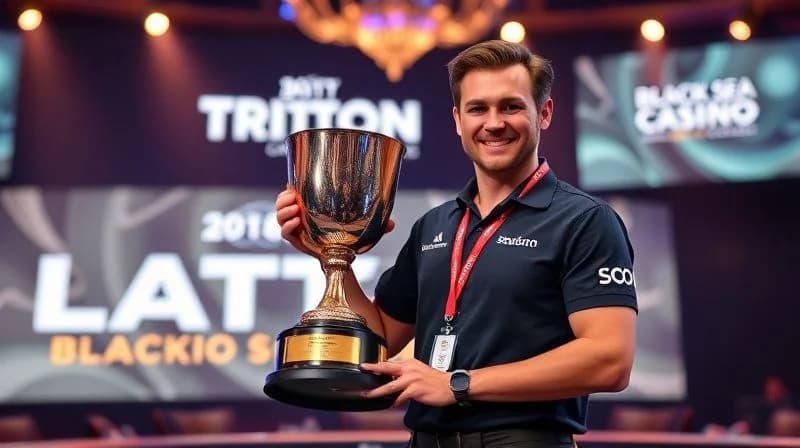
Michael Watson Wins in Montenegro, Secures Seventh Triton Title
Canadian poker player Michael Watson won the Triton series in Montenegro, claiming his seventh Triton title and further solidifying his place in high-stakes poker.
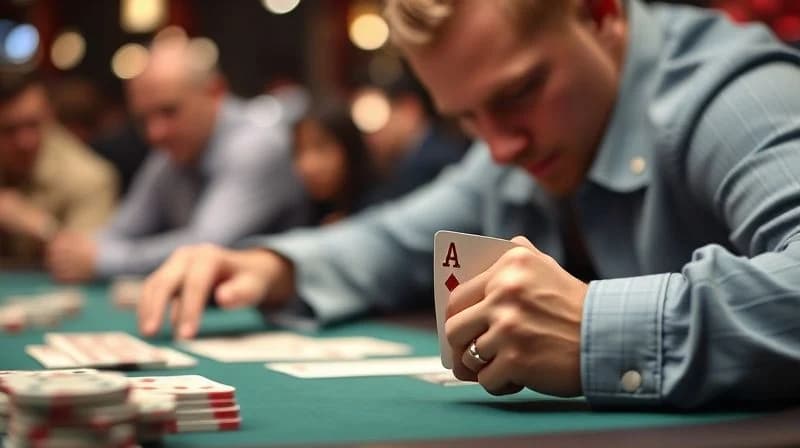
Small blind A5s all-in vs UTG 4-bet: GTO strategy and low-stakes adjustments
This article analyzes a common GTO strategy: when the small blind faces a UTG 4-bet, with A5s there is about a 51% probability of shoving all-in and 49% probability of calling. Why is that? This strategy is suitable for high-stakes games, but should you fold in NL2 or low-stakes live games? We will discuss from the perspectives of card blocking, range balancing, and level differences.

Facing an OMC's Cold 3-Bet and Calling Leads to a Multiway Pot, How to Respond?
A player encounters a rare situation in a $5/$5 cash game: an old man coffee OMC who has never 3-bet before makes a cold 3-bet preflop, and calling almost certainly results in a multiway pot. The article analyzes OMC's range characteristics and discusses reasonable settings for 4-bet, call, and fold ranges, taking into account postflop position and pot control.
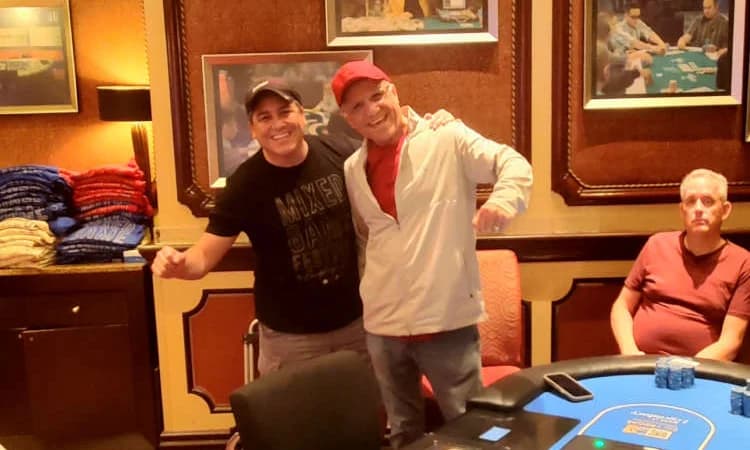
Mixed Game Festival 14: Day 9 Recap – Eli Elezra Attends
The 14th Mixed Game Festival enters Day 9, with Poker Hall of Famer and five-time WSOP bracelet winner Eli Elezra making a surprise appearance, interacting with players, and signing books. There were also free giveaways including Faded Spade playing cards and poker books by Jonathan Little. The article also introduces the day's 'Best Player' Tom Watson and 'Best Dealer' Jo Eusebio.

3-Bet Line: Balancing Call and Re-raise Strategy
This article delves into the decision balance of the 3-bet line in Texas Hold'em, analyzing when to call and when to re-raise, and explains how to construct a balanced range that combines both value and bluffs, helping players avoid common mistakes and improve the long-term profitability of their preflop strategy.

UTG Opening Range Construction: Correct Choices for the Tightest Position
UTG Under the Gun is the most disadvantageous position preflop. Constructing a reasonable opening range is key to avoiding big mistakes. This article starts with definitions and principles, provides typical range examples, analyzes common misconceptions, and helps you master the correct strategy for the tight position.