Bottom pair
Editor: dezhoupuke.orgRelated Glossary
Thin Value
Thin Value
Thin value is betting a hand that only beats worse hands and loses to better ones, expecting to be called by worse. It …
Way Ahead Way Behind
Way Ahead Way Behind
In practice, this concept guides decision-making: when in such a situation, betting or raising may only cause the trail…
Bottom Pair
Bottom Pair
In practice, a bottom pair is usually the weakest made hand, as it is easily overtaken by higher pairs or draws. It is …
Complete
Complete
It usually means that the drawing phase is over and the hand has clear equity. In practice, a completed hand is a key d…
Two Outer
Two Outer
In practice, this usually means extremely low equity approximately 4.5% to 8.4%. Players must carefully evaluate pot od…
Condensed Range
Condensed Range
A range composed primarily of medium-strength hands with similar equity, lacking clear polarization between very strong…
Wet Flop
Wet Flop
A wet flop is a flop texture that contains many possible draws straight draws, flush draws or high connectivity, making…
Static River
Static River
A river card that does not complete draws or change the board texture in a way that significantly alters hand strength …
Related Strategy
Complete Strategy Guide for Starting Hand K3o: Preflop Ranges and Postflop Play by Position
K3o is one of the weakest starting hands in Texas Hold'em, but there are still a few profitable ways to play it. This article provides a detailed analysis of K3o's preflop ranges in different positions (including whether to enter the pot and raise/call strategies), as well as postflop play when hitting top pair, draws, or garbage hands, helping you make correct decisions in special scenarios such as the small blind and big blind.
Semi-Bluff vs Pure Bluff Strategy: When to Strike, When to Fold
In poker, bluffs are divided into pure bluffs no equity and semi-bluffs with draw potential. This article explains the differences, selection criteria, and practical applications to help you make optimal decisions on the flop and turn.
Defending Big Blind on Low Boards: From Stealing Blinds to Counterattacks
In Texas Hold'em, defending the big blind on low boards small or medium boards is a key source of profit. This article details how to identify steals, adjust ranges, leverage post-flop advantages, and provides practical examples.
Thin Value River Extraction: How to Extract Maximum Profit from Marginal Hands
Thin value river extraction is an advanced poker technique that refers to value betting on the river with a hand that is weak but still ahead of the opponent's range. This article will teach you how to identify and execute thin value river bets from three dimensions: hand range analysis, opponent type assessment, and bet sizing, helping you avoid over-bluffing or missing value by checking.
Low Board Big Blind Defense: Core Strategy from Loss to Profit
When the board is low flop cards all below 9 and no Ace, defending the big blind becomes more difficult but is also key to profitability. This article explains how to construct a defense range, respond to different bet sizes, timing, and common mistakes, helping you turn the tables from a disadvantageous position.
Low Board Big Blind Defense with Wide Range: How to Fight Back on Small Flops
When the flop comes low e.g., 2-3-6, the big blind can aggressively defend with a wide range. This article explains why low boards favor the big blind and how to exploit the preflop raiser's range weaknesses through strategies like check-raises and donk bets, while maintaining balance.
Pot Control Strategy for Marginal Hands
Marginal hands e.g., middle pair, weak flush draws have medium strength post-flop and require pot control to avoid over-committing. This article covers how to identify marginal hands, play on the flop and turn, and use position and range advantage to control the pot, minimizing losses and maximizing value.
Strategy for Defending Wide Range from Big Blind on Low Boards
In poker, when the flop is low e.g., all cards below 7, the big blind can defend with a wider range because short-stacked or early position players' ranges contain more high cards that miss low boards. This tutorial covers low board characteristics, big blind defense adjustments, bet sizing, and common mistakes to boost profitability.
Low Board Big Blind Defense Strategy: How to Use a Wide Range Against Continuation Bets
When the flop is low and unconnected, the big blind player can defend with a wider range. This article teaches you to identify low boards, construct a defending range, adjust calling and raising frequencies, and utilize position and pot odds to maximize value.
Low Board Big Blind Defend Wide Range
This article delves into how the big blind can defend with a wide range against the opponent's continuation bet on low board flops e.g., 722r, 842r. Starting with positional scenario analysis, it recommends specific ranges including bottom pair, gutshot draws, and junk hands, and explains range construction logic, adjustment factors opponent tendencies, stack depth, GTO reference data, and finally provides practical application tips to help you maximize exploitative advantage on dry low boards.
Low Board Big Blind Wide Defending: The Art of Balance and Exploitation
This article analyzes how to construct a wide defending range from the big blind perspective on low boards low card community cards, balancing preventing steals and avoiding over-folding. It details range logic, adjustment factors, and GTO references, and provides practical application tips.
Wide Defending Range on Low Flops: Flop Exploitation and GTO Balance
This article deeply analyzes how the big blind constructs and adjusts a wide defending range on low flops board cards lower than 7. It covers position scenarios, recommended hand types, range construction logic pot odds, board structure, key adjustment factors opponent's C-Bet frequency, flop connectivity, and provides GTO reference range percentages and practical application examples to help you achieve positive expectation on low flops.
Related Players
' width='512' height='512'/%3E%3Ctext x='256' y='256' text-anchor='middle' dominant-baseline='central' font-family='system-ui,sans-serif' font-size='240' font-weight='bold' fill='hsl(233,30%25,85%25)'%3EBF%3C/text%3E%3C/svg%3E)
Bo Feng
 China
China
Bo Feng is a poker player from China, active in domestic poker tournaments, known for his solid style and continuous learning attitude.
' width='512' height='512'/%3E%3Ctext x='256' y='256' text-anchor='middle' dominant-baseline='central' font-family='system-ui,sans-serif' font-size='240' font-weight='bold' fill='hsl(275,30%25,85%25)'%3EMN%3C/text%3E%3C/svg%3E)
Mikkel Nielsen
 Denmark
Danish poker player, world ranking 11393, total winnings approximately $295,349. Has placed in multiple large tournaments, known for a solid style.
' width='512' height='512'/%3E%3Ctext x='256' y='256' text-anchor='middle' dominant-baseline='central' font-family='system-ui,sans-serif' font-size='240' font-weight='bold' fill='hsl(261,30%25,85%25)'%3ENJ%3C/text%3E%3C/svg%3E)
Nicolas Jean Paul Ludwicki
 France
Nicolas Jean Paul Ludwicki is a French poker player who has recorded several notable cashes in European live tournaments between 2012 and 2018, including a final table appearance at the 2018 Unibet Open Malta where he finished 9th for €5,750. He also reached the final table of the 2016 Unibet Open London, earning £8,400 for 8th place.
' width='512' height='512'/%3E%3Ctext x='256' y='256' text-anchor='middle' dominant-baseline='central' font-family='system-ui,sans-serif' font-size='240' font-weight='bold' fill='hsl(14,30%25,85%25)'%3ETN%3C/text%3E%3C/svg%3E)
Takumi Nakayama
 Japan
Japan
' width='512' height='512'/%3E%3Ctext x='256' y='256' text-anchor='middle' dominant-baseline='central' font-family='system-ui,sans-serif' font-size='240' font-weight='bold' fill='hsl(175,30%25,85%25)'%3EKI%3C/text%3E%3C/svg%3E)
Khaled Ibrahim Nassief Gutierrez
 Mexico
Khaled Ibrahim Nassief Gutierrez is a Mexican poker player known for his live and online tournament appearances, including cashes in WSOP Online events. He gained attention for a bold call with bottom pair at the Borgata Summer Poker Open and participated in the Lone Star Poker Series Main Event.
' width='512' height='512'/%3E%3Ctext x='256' y='256' text-anchor='middle' dominant-baseline='central' font-family='system-ui,sans-serif' font-size='240' font-weight='bold' fill='hsl(98,30%25,85%25)'%3EAW%3C/text%3E%3C/svg%3E)
Alex Wice
 Thailand
Alex Wice is a Canadian-born poker professional and crypto trader from Toronto, Ontario, who has also been associated with Thailand. He first gained attention by winning PokerStars' Sunday Warm Up in 2008 for $135,000, and later finished third in a WSOP event in 2009. With over $1.8 million in live tournament earnings, he is recognized for his aggressive and mathematically grounded approach to the game.
' width='512' height='512'/%3E%3Ctext x='256' y='256' text-anchor='middle' dominant-baseline='central' font-family='system-ui,sans-serif' font-size='240' font-weight='bold' fill='hsl(316,30%25,85%25)'%3EJS%3C/text%3E%3C/svg%3E)
Jimmy Stringer
 United States
Jimmy Stringer, American poker player, world ranking 22874th, career total earnings approximately $142,847. Known for solid style, multiple cashes in WSOP and other events.
' width='512' height='512'/%3E%3Ctext x='256' y='256' text-anchor='middle' dominant-baseline='central' font-family='system-ui,sans-serif' font-size='240' font-weight='bold' fill='hsl(8,30%25,85%25)'%3EZM%3C/text%3E%3C/svg%3E)
Zhang Mingcheng
China
Zhang Mingcheng, a Chinese poker player, ranked 10958th in the world, with career earnings over $310,000. He has achieved many good results in domestic and international tournaments, known for his steady play style.
Related News
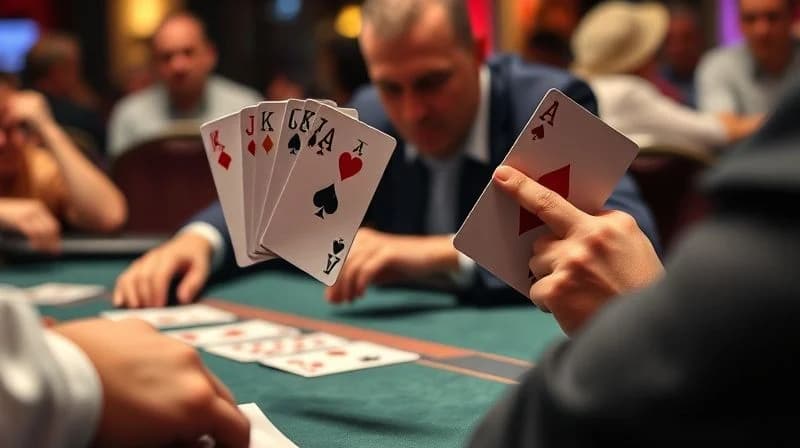
Live MTT Final Table Exit: How to Play This A7 Suited Hand?
Reddit poker player shares live MTT final table hand analysis: 8bb on the button shoves with Ac7c, gets called by opponent's bottom pair and busts. Community discusses whether a preflop shove is better and how to improve TAG strategy.
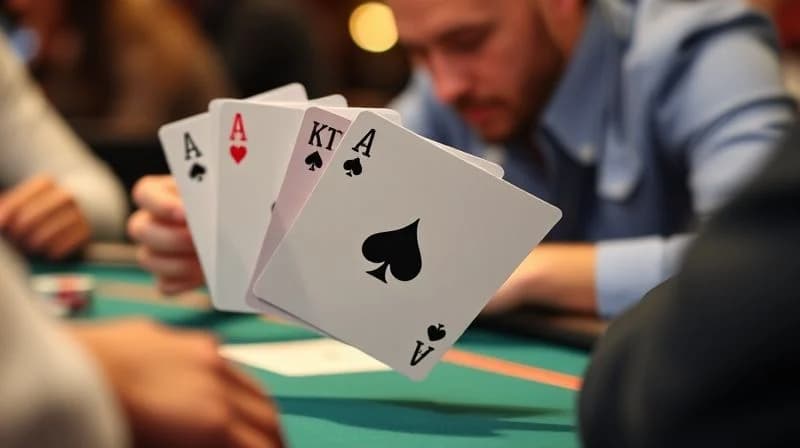
Top Two Pair with Ace Kicker on Paired Board, Reddit Users Discuss How to Play
A player holding A4o flops top two pair on a TT4 paired board, bets on the turn, then folds to a raise. This article analyzes the strategic points and common mistakes.

Five Players, Millions in Prizes, One Turn Card — The Line Between Dreams and Nightmares
How did one turn card determine millions in prizes for five players? This article reviews the most dramatic turn card moments in poker history, exploring the role of luck and skill at critical moments.

Rainbow Board Strategy: The Essence of Playing Without a Flush Draw
This article systematically explains the definition and principles of rainbow boards, as well as betting, calling, and bluffing strategies when there is no flush draw, combined with practical examples and common mistakes, to help players make optimal decisions on the flop.

Complete Analysis of Monotone Board Defense and Attack Strategies
This article provides in-depth explanations of its definition, probability principles, attack and defense strategies, common mistakes, and practical examples, helping players make correct decisions on the flop, turn, and river.

Postflop Optimal Pot Control: When to Choose Small Pot Play
Through practical hand examples, it analyzes the play choices for marginal made hands, drawing hands, and out-of-position situations, and points out common misconceptions, helping players maintain profitability while avoiding the risk of large pots.

Call and Bet Frequency on Two-tone Boards
Two-tone board is a flop with two cards of the same suit, which significantly impacts player strategy. This article explains its definition, principles, practical strategies, and common misconceptions to help players optimize their call and bet frequencies.

Satellite Late-Stage Strategy: The Key to Winning from Bubble to Ticket
The late stage of a satellite tournament is the critical period to secure a ticket. The strategic focus shifts from maximizing chips to prioritizing survival. This article explains ICM principles, practical decisions, and common mistakes to help you win steadily.

Early Stage Super Satellite Strategy
Super satellites aim to win main event tickets. Early stage strategy focuses on survival and accumulation, avoiding excessive risk. This article details definitions, principles, practical examples, and common misconceptions.