Pure Bluff
Editor: dezhoupuke.orgRelated Glossary
Merged Range
Merged Range
A merged range contains strong made hands and medium-strength hands, betting for value and protection. It is the opposi…
Bluff
Bluff
A bluff is a bet or raise with a hand unlikely to win at showdown, aiming to fold better hands. It is not a pure lie—it…
Semi-Bluff
Semi-Bluff
A semi-bluff is a bet or raise with a hand that is not currently best but can improve to the best hand. It is not a pur…
Sizing Tell
Sizing Tell
Term: Sizing Tell A sizing tell is a non-verbal cue in which a player unintentionally reveals the strength of their han…
Linear 3-Bet
Linear 3-Bet
In practice, this strategy is often used against opponents who fold frequently or in the blinds, aiming to take down th…
Pure Bluff
Pure Bluff
A pure bluff is a bet or raise made with a hand that has little to no chance of winning if called, relying entirely on …
Semi-Bluff Raise
Semi-Bluff Raise
A raise made with a hand that is currently not the best but has significant potential to improve to the best hand on a …
Bluff with Equity
Bluff with Equity
A bluff made with a hand that has a chance to improve to the best hand, combining fold equity with draw equity.
Condensed Range
Condensed Range
A range composed primarily of medium-strength hands with similar equity, lacking clear polarization between very strong…
Gold Mine Table
Gold Mine Table
A poker table with an unusually high number of weak or unskilled players, making it highly profitable for skilled playe…
Related Strategy
Squeeze Play Complete Guide: Principles, Timing, and Practical Tips
Squeeze play is an advanced preflop attack strategy that uses a large raise to force intermediate players to fold, thereby isolating the initial raiser with a weaker range. This article details the principles, applicable scenarios, execution points, and common mistakes of squeeze play, helping you effectively use this weapon at the table.
Turn Double Barrel Strategy: When to Continue Betting and When to Give Up
The double barrel on the turn is a strategy of betting again on the turn after a continuation bet on the flop. This article details the applicable scenarios, hand strength requirements, opponent range analysis, and common mistakes of the double barrel, helping you make more profitable decisions on the turn.
Semi-bluff vs Pure Bluff: How to Choose the Best Bluff Type on the Flop
This article deeply analyzes the core differences between semi-bluffs and pure bluffs, providing a practical selection framework from perspectives such as pot equity, opponent range, and bet sizing, to help players make higher expected value bluff decisions on the flop.
Selection of Semi-Bluff vs Pure Bluff: When to Bluff and When to Value Bet
Learn to distinguish between semi-bluff and pure bluff, and master the logic of selection in different poker situations. This article covers from definitions and key factors to practical examples, helping you optimize your bluffing strategy to improve long-term profitability.
Semi-Bluff vs Pure Bluff Strategy: When to Strike, When to Fold
In poker, bluffs are divided into pure bluffs no equity and semi-bluffs with draw potential. This article explains the differences, selection criteria, and practical applications to help you make optimal decisions on the flop and turn.
Complete Strategy Guide for Starting Hand T3s: Pre-flop Ranges and Post-flop Play by Position
T3s is a very weak suited connector, only playable in very few specific spots. This article thoroughly analyzes T3s pre-flop range selection in various positions, as well as post-flop strategies when hitting draws, made hands, or air, helping players avoid common mistakes and maximize speculative value.
Postflop Bluffing Complete Guide: Advanced Strategy from Theory to Practice
Postflop Bluffing Complete Guide: Advanced Strategy from Theory to Practice: Win rate, Common Mistakes, Applicable Scenarios & FAQ — Postflop bluffing is an important source of poker profits. This article systematically explains the core principles, hand selection, scenario analysis, and practical tips of postflop bluffing, helping you make more accurate bluffing decisions on the flop, turn, and river, and improve your overall strategy level.
How to Correctly Bluff-Catch on the River: A Complete Guide from Hand Reading to Decision Making
How to correctly bluff-catch on the river: a complete guide from hand reading to decision making: win rate, common mistakes, applicable scenarios & FAQ — Bluff-catching is one of the most challenging and profitable skills in Texas Hold'em. This article systematically explains the core logic and practical techniques of river bluff-catching from dimensions such as opponent's range, board structure, bet sizing, previous actions, and your own hand blockers, helping you reduce the number of times you get bluffed and increase your win rate.
Nut Blocker Bluff: How to Use Blockers for Efficient Steals
A nut blocker is a hand that prevents your opponent from holding the nut flush or nut straight. This article explains how to identify such bluffing opportunities by combining opponent range, bet sizing, and board structure to create high-success-rate pure bluffs.
Tom Dwan's huge mistake? Jonathan Little deep analysis of Hustler Casino Live key hand
This article analyzes a key hand between Ryan Feldman and Tom Dwan on Hustler Casino Live. Feldman with Q9o flops top pair, Dwan holds pocket tens, faces a large river bet. Jonathan Little explains both players' decision logic and discusses how to exploit non-GTO betting patterns.
Flop C-Bet Frequency Range: Position, Board Texture & GTO Guide
This article systematically explains the logic behind constructing a flop c-bet frequency table, covering positional scenarios, recommended ranges, adjustment factors, and GTO references. Through practical examples, it demonstrates how to optimize frequencies based on flop texture and opponent tendencies, helping players improve decision-making on the flop.
Flop Range Betting Frequency Table: BTN vs BB Dry Board Scenario
This article uses the example of a 6-max BTN vs BB heads-up scenario with a flop of K♠7♦2♣ dry board to explain the flop range betting frequency table in detail. It covers recommended betting ranges, construction logic, adjustment factors, and GTO references, helping players optimize decisions in similar situations and improve actual win rates.
Related Players
' width='512' height='512'/%3E%3Ctext x='256' y='256' text-anchor='middle' dominant-baseline='central' font-family='system-ui,sans-serif' font-size='240' font-weight='bold' fill='hsl(324,30%25,85%25)'%3EYL%3C/text%3E%3C/svg%3E)
Yongjia Lin
 Australia
Yongjia “Gary” Lin is an Australian professional poker player who has rapidly risen through the ranks of the international high roller circuit, with career live earnings exceeding $1.15 million. Known for his presence in major festivals across Asia and Australia, he has become a dominant force in events like the World Poker Tour (WPT) and Triton Poker Super High Roller Series.
' width='512' height='512'/%3E%3Ctext x='256' y='256' text-anchor='middle' dominant-baseline='central' font-family='system-ui,sans-serif' font-size='240' font-weight='bold' fill='hsl(71,30%25,85%25)'%3ELM%3C/text%3E%3C/svg%3E)
Leonardo Mendonca Rizzo
 Brazil
Brazilian professional poker player, accomplished both online and live, world ranking 1965, total earnings over $1.5 million. Known for aggressive style and consistent profits.
' width='512' height='512'/%3E%3Ctext x='256' y='256' text-anchor='middle' dominant-baseline='central' font-family='system-ui,sans-serif' font-size='240' font-weight='bold' fill='hsl(69,30%25,85%25)'%3ESH%3C/text%3E%3C/svg%3E)
Sergio Hiroshi Hamamoto
Brazil
Sergio Hiroshi Hamamoto is a poker player from Brazil, known for his consistent performance in online tournaments and his Brazilian-Japanese mixed heritage. He has a certain reputation in the South American poker scene, having made multiple final tables in Brazilian series, but specific career data is not detailed in public sources.
' width='512' height='512'/%3E%3Ctext x='256' y='256' text-anchor='middle' dominant-baseline='central' font-family='system-ui,sans-serif' font-size='240' font-weight='bold' fill='hsl(184,30%25,85%25)'%3ETC%3C/text%3E%3C/svg%3E)
Tomasz Chmiel
 Poland
Polish poker player, world ranking 13309, career total earnings $256,896. Has cashed multiple times in WSOP events, known for a solid style.
' width='512' height='512'/%3E%3Ctext x='256' y='256' text-anchor='middle' dominant-baseline='central' font-family='system-ui,sans-serif' font-size='240' font-weight='bold' fill='hsl(207,30%25,85%25)'%3ECL%3C/text%3E%3C/svg%3E)
Cannon Lim
 Singapore
Cannon Lim is a professional poker player from Singapore, ranked approximately 24685th globally, with career earnings over $130,000. He is active in Asian tournaments, has made multiple final tables, and is known for a tight-aggressive style.
' width='512' height='512'/%3E%3Ctext x='256' y='256' text-anchor='middle' dominant-baseline='central' font-family='system-ui,sans-serif' font-size='240' font-weight='bold' fill='hsl(352,30%25,85%25)'%3EYL%3C/text%3E%3C/svg%3E)
Yu Lun Huang
 Taiwan
Yu Lun Huang, a poker player from Taiwan, world ranking 23783, total earnings $136,138. Known for a steady style, he has achieved good results in multiple Asian tournaments.
' width='512' height='512'/%3E%3Ctext x='256' y='256' text-anchor='middle' dominant-baseline='central' font-family='system-ui,sans-serif' font-size='240' font-weight='bold' fill='hsl(334,30%25,85%25)'%3EJD%3C/text%3E%3C/svg%3E)
Jon Des Pois
 United States
American professional poker player, specializing in online tournaments, with over $140,000 in winnings, winner of a WCOOP side event.
' width='512' height='512'/%3E%3Ctext x='256' y='256' text-anchor='middle' dominant-baseline='central' font-family='system-ui,sans-serif' font-size='240' font-weight='bold' fill='hsl(194,30%25,85%25)'%3ERB%3C/text%3E%3C/svg%3E)
Robert Brobst
United States
Robert Brobst is an American professional poker player, known for finishing 3rd in the 2021 WSOP Main Event. He is known for his aggressive play and bluffing ability in high-pressure situations, and is also a poker coach.
Related News
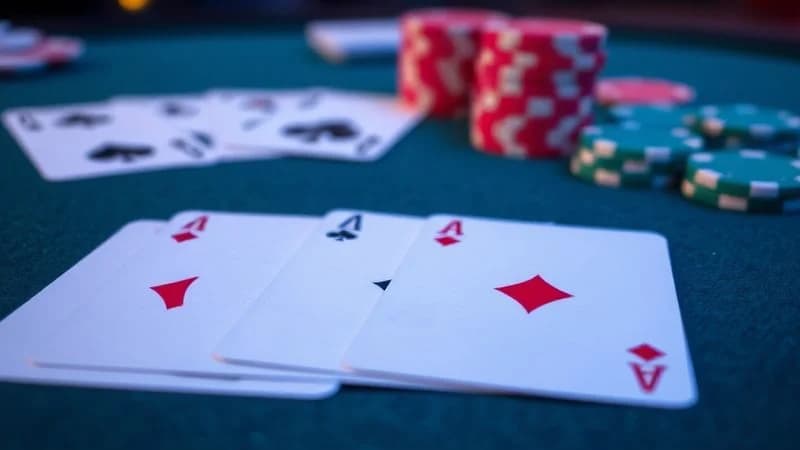
Accidentally Signed Up for a PLO Tournament? A Quick Start Strategy Guide for Newbies
For beginners who accidentally signed up for a PLO tournament, this guide provides quick-start strategies covering game characteristics, hand selection, post-flop play, etc. It emphasizes less bluffing and focusing on nut potential to help you quickly adapt to PLO in a short time.

Hand Analysis at 1/3: Rivered by Quads – Cooler or Misplay?
A Reddit user shares a 1/3 live hand: holding 77 on a board of 8-8-5-7-K, rivered a full house. Opponent shoves and shows quads. The author reflects on whether to raise the turn and whether the river shove was correct. This article analyzes opponent leaks and decision logic.
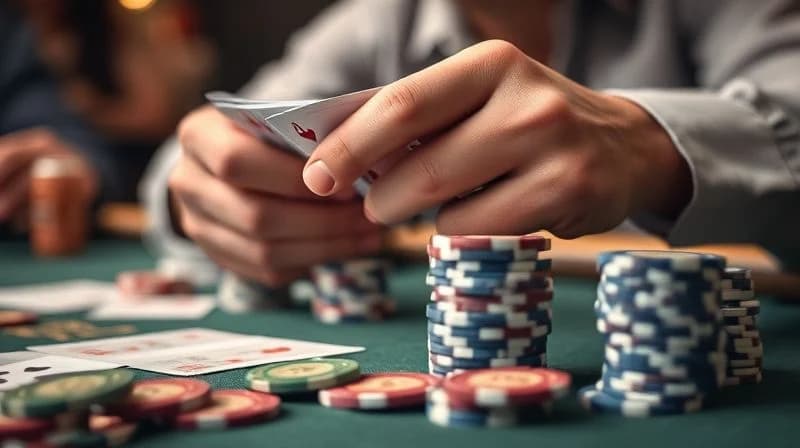
Live 5/5/10 PLO: Top Two Pair + Gutshot on the Turn, Should You Call?
In a 5/5/10 Pot-Limit Omaha game, Hero hits top two pair and a gutshot straight draw on the turn. Facing an unknown opponent's lead bet, should they call? This article analyzes the hand details and decision logic.