Stack Advantage
Editor: dezhoupuke.orgRelated Glossary
Final Table
Final Table
Final Table The final table is the final stage of a Texas Hold'em tournament where all remaining players are consolidat…
Big Stack
Big Stack
Its practical significance lies in greater margin for error and leverage, allowing the player to apply pressure more fr…
Chip Leader
Chip Leader
This position grants the player significant table control and margin for error, allowing them to apply pressure more fr…
ITM
ITM
The practical significance of this term is that it marks a shift from simply competing for rank to securing profit. It …
Effective Stack
Effective Stack
Effective stack is the smallest stack among players in a hand, capping how much can be wagered. It's not your own stack…
Covered
Covered
In practice, being covered means you face the risk of elimination while the opponent does not, which affects your decis…
Deep-Stacked
Deep-Stacked
Deep-Stacked Deep-stacked refers to a player having a stack size significantly larger than the standard buy-in or typic…
Chip Dumping
Chip Dumping
The core purpose is to achieve interest transfer or fraud through abnormal table operations. In practice, this behavior…
Chip Race
Chip Race
In practice, this term is often used to describe the tense period around the bubble or the edge of the money, when shor…
Equal Chop
Equal Chop
An agreement among remaining tournament players to divide the remaining prize pool equally regardless of their chip sta…
Chip Advantage
Chip Advantage
Having a larger stack of chips than one or more opponents, which grants strategic leverage such as the ability to apply…
Shootout
Shootout
A tournament format where each table plays down to one winner, who advances to the next round until a final table deter…
Related Strategy
ICM Bubble Strategy Guide: The Art of Protecting Chips and Precision Attacks
The bubble phase of poker tournaments is a critical profit stage. This article details how the ICM model influences decisions, teaching you to adjust preflop ranges, leverage stack depth and position advantages, and maximize ICM equity while avoiding elimination. Includes practical examples and common mistake analysis.
Satellite Tournament Advancement Strategy: Key Techniques to Win High-Value Tickets at Low Cost
Satellite tournaments are a shortcut for poker players to win tickets to large tournaments with a small investment. This article details the special structure of satellites, ICM strategy, bubble play, chip management, and psychological tactics to steadily improve your advancement rate.
Deep Stack Tournament Early Level Strategy: Steadily Accumulate by Leveraging Deep Stack Advantage
In deep stack tournaments, early levels have low blinds and deep stacks. The core strategy is to avoid unnecessary variance and leverage deep stacks to play post-flop. This article explains hand selection, positional value, pot control, and exploitative play to help you steadily accumulate in the early stages and build an advantage for later.
Rebuy Tournament Strategy Guide: Maximizing Advantages Using Buy-In Rules
Rebuy tournaments allow players to buy more chips at certain stages, altering traditional tournament strategy. This article details aggressive early play, rebuy timing, bankroll management, and late-stage adjustments to help you leverage the rules and profit in rebuy events.
Tournament Bubble Phase Stealing Blinds Strategy
The bubble phase of a tournament is a critical stage for profit. This article delves into how to exploit opponents' tight-passive tendencies under ICM pressure and accumulate chips through a reasonable blind-stealing strategy. It covers position selection, stack size analysis, range adjustments, and practical considerations to help you safely expand your advantage during the bubble.
MTT Mid-Stage Re-steal Strategy: How to Effectively Steal Blinds
In the mid-stage of MTT, blinds increase and early position steals are frequent. Mastering re-steals is key to building chips. This article explains the timing, range, bet sizing, and opponent selection for re-steals, helping you safely steal blinds and build a chip advantage in the tournament mid-stage.
Blind Stealing During Bubble Phase: Maximize Your Advantage
During tournament bubble phases, blind stealing is a golden opportunity to increase your stack. This article explains bubble characteristics, optimal positions and hand ranges for stealing, bet sizing, and how to counter re-steals, helping you safely survive the bubble and build a chip advantage.
Blind Stealing and Re-Stealing: A Strategy Guide to the 3bet War
This article explains the underlying logic and practical techniques of blind stealing, re-stealing, and the 3bet war in Texas Hold'em. It covers position selection, range balancing, the key impact of stack depth, and adjustments against aggressive opponents to help you build an advantage in the middle and late stages.
Chip Leader Bullying Strategy: How to Use Chip Advantage to Dominate Tournaments
In Texas Hold'em tournaments, chip leaders have unique leverage. This tutorial explains the core principles of bullying strategy, best timing, specific techniques, and risk management to help you convert chip advantage into higher win rates and final table seats.
Deep-Stack vs Short-Stack: Winning Strategies in Preflop 3-Bet Wars
This article provides an in-depth analysis of strategy differences between deep stacks and short stacks in preflop 3-bet wars. It covers how effective stack depth affects 3-bet ranges, 4-bet ranges, and calling ranges, as well as how to adjust re-raise frequency and sizing based on opponent's stack size, helping you make optimal decisions at various stack depths.
Satellite Tournament Qualifying Strategies: The Wisdom from Survival to Tickets
The goal of satellite tournaments is to qualify, not to win; strategy must revolve around survival. This article explains tight-aggressive ranges, ICM pressure management, bubble play, and leveraging big stack advantages to help you efficiently earn main event tickets.
Strategy Adjustment and Practical Application in the Chinese Poker Market
Starting from the environment of the Chinese poker market, this article analyzes the characteristics of player behavior (conservative tendency but high bluffing frequency), and provides corresponding strategies for hand selection, post-flop exploitation, and bankroll management, helping readers optimize decisions in limit and no-limit games.
Related Players
' width='512' height='512'/%3E%3Ctext x='256' y='256' text-anchor='middle' dominant-baseline='central' font-family='system-ui,sans-serif' font-size='240' font-weight='bold' fill='hsl(347,30%25,85%25)'%3EBM%3C/text%3E%3C/svg%3E)
Bruno Miron
 Argentina
Bruno Miron, Argentine poker player, ranked 36187th in the world, with career total prize money of $83,521. Plays a solid style and has achieved good results in regional tournaments multiple times.
' width='512' height='512'/%3E%3Ctext x='256' y='256' text-anchor='middle' dominant-baseline='central' font-family='system-ui,sans-serif' font-size='240' font-weight='bold' fill='hsl(74,30%25,85%25)'%3EYB%3C/text%3E%3C/svg%3E)
Yani Benitez
 France
Yani Benitez is a poker player from France who has gained attention for appearing in multiple international poker tournaments. His playing style is known for being aggressive, and he enjoys a certain level of recognition in the poker community.
' width='512' height='512'/%3E%3Ctext x='256' y='256' text-anchor='middle' dominant-baseline='central' font-family='system-ui,sans-serif' font-size='240' font-weight='bold' fill='hsl(256,30%25,85%25)'%3ETK%3C/text%3E%3C/svg%3E)
Thomas Karbach
 Germany
Thomas Karbach is a professional poker player from Germany, known for his consistent performance in online high-stakes tables and live tournaments. His playing style is famous for aggressive attack and precise hand reading.
' width='512' height='512'/%3E%3Ctext x='256' y='256' text-anchor='middle' dominant-baseline='central' font-family='system-ui,sans-serif' font-size='240' font-weight='bold' fill='hsl(0,30%25,85%25)'%3ECN%3C/text%3E%3C/svg%3E)
Christoffer Nilsen
 Norway
Christoffer Nilsen is a Norwegian professional poker player known for his online multi-table tournament results. He has achieved excellent results in multiple online events, and his playing style is characterized by aggressive and deep-stack strategies.
' width='512' height='512'/%3E%3Ctext x='256' y='256' text-anchor='middle' dominant-baseline='central' font-family='system-ui,sans-serif' font-size='240' font-weight='bold' fill='hsl(358,30%25,85%25)'%3ETL%3C/text%3E%3C/svg%3E)
Tsu Lin Tsao
 Taiwan
Tsu Lin Tsao is a poker player from Taiwan, world rank 32470, career total winnings over $94,000. He has shown consistent strength in multiple events and is an emerging force in Taiwan's poker scene.
' width='512' height='512'/%3E%3Ctext x='256' y='256' text-anchor='middle' dominant-baseline='central' font-family='system-ui,sans-serif' font-size='240' font-weight='bold' fill='hsl(294,30%25,85%25)'%3EDF%3C/text%3E%3C/svg%3E)
Dapo Fadeyi
 United States
Dapo Fadeyi, American professional poker player, world ranked 12494, lifetime earnings over $270,000. Known for aggressive style, has achieved good results in WSOP and other events.
' width='512' height='512'/%3E%3Ctext x='256' y='256' text-anchor='middle' dominant-baseline='central' font-family='system-ui,sans-serif' font-size='240' font-weight='bold' fill='hsl(131,30%25,85%25)'%3EBS%3C/text%3E%3C/svg%3E)
Brandon Sakamoto
United States
Brandon Sakamoto is a poker player from the United States, known for his online tournament performance. Public records do not detail his specific career data.
' width='512' height='512'/%3E%3Ctext x='256' y='256' text-anchor='middle' dominant-baseline='central' font-family='system-ui,sans-serif' font-size='240' font-weight='bold' fill='hsl(231,30%25,85%25)'%3EDS%3C/text%3E%3C/svg%3E)
Donnie Stinchcomb
United States
Donnie Stinchcomb is a professional American poker player known for his outstanding performance in the WSOP Main Event and aggressive table style. He has finished third in the WSOP Main Event twice, with cumulative winnings of millions of dollars.
Related News
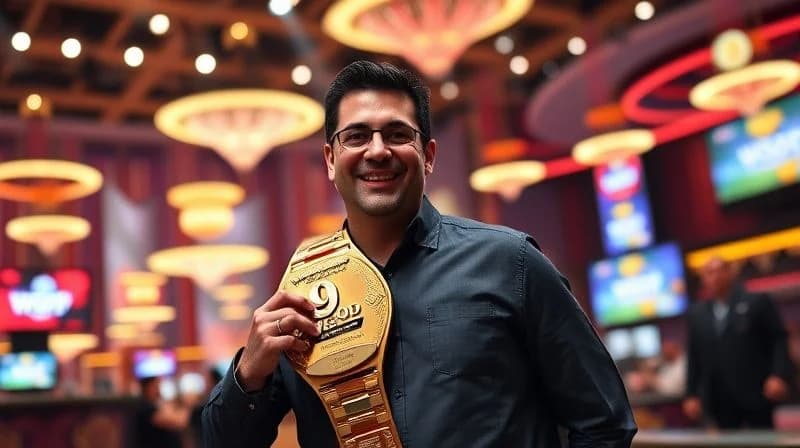
Michael Mizrachi Strikes Again: Wins 9th WSOP Bracelet in 2026
On June 29, 2026, Michael 'The Grinder' Mizrachi won the WSOP $10,000 Pot-Limit Omaha Championship, claiming his 9th WSOP bracelet and $1,350,203. This victory continues his magical 2025 run where he won both the $50,000 Poker Players Championship and the Main Event.

WSOP 2026 Day 14: Erwann Pecheux Leads the 2K No-Limit Event, 12 Remain
WSOP 2026 Day 14: The $2,000 No-Limit Hold'em event is heating up. French player Erwann Pecheux leads with a massive chip advantage. Only 12 players remain, and the championship battle is imminent.

EPT Monte Carlo 2026: Jason Koon Dominates to Win Invitational, Main Event Bubble Bursts
EPT Monte Carlo 2026 was spectacular: Jason Koon displayed dominance to win the exclusive invitational, while the main event burst the bubble into the money. The event attracted top global players, and the poker feast reached new heights.

Jorge Abreu Leads Strongly at EPT Paris Main Event Final Table
According to PokerNews, Portuguese player Jorge Abreu dominated at the EPT Paris Main Event final table, leading with a huge chip advantage and ultimately winning the title. This victory adds another brilliant chapter to his career.

Tobias Schwecht: From Huge Chip Lead to First Triton Title, Earning $465,000
German player Tobias Schwecht, leveraging an overwhelming chip advantage, captured his first Triton title and $465,000 in prize money, showcasing remarkable patience and strategy.

Michael Mizrachi Wins 2025 Main Event in Record Time
According to Pokerlogia, renowned poker player Michael Mizrachi won the main event in record time in 2025, once again proving his extraordinary skill.

Bernhard Binder dominates WSOP Paradise Super Main Event, takes home $10 million
Austrian player Bernhard Binder wins WSOP Paradise Super Main Event, earning $10 million, becoming one of the biggest winners in the event's history.

Satellite Early Stage Strategy: The Art of Balancing Survival and Accumulation
The core strategy of the early stage of satellite tournaments low blinds, deep stacks is to find a balance between survival and accumulation. This article explains definitions, ICM principles, practical examples, and common mistakes to help you improve your satellite tournament qualification rate.

Turbo Final Table
Final table strategy in turbo tournaments is completely different from regular tournaments: short blinds, fast pace, high ICM pressure, requiring aggressive blind stealing and range adjustments. This article provides a comprehensive analysis from definitions and principles to practical examples and common misconceptions, explaining how to gain an advantage at turbo final tables.

In the Money Turbo Strategy
After entering the money, the pace and strategy of the tournament fundamentally change. Turbo strategy emphasizes leveraging chip advantage, aggressive blind stealing, and adapting to fast blind levels to maximize final ranking and prize money. This article explains definitions, principles, practical examples, and common mistakes to help you improve your ITM stage performance.

Mid-Stage Mystery Bounty Tournament Strategy Explained
In-depth exploration of strategy adjustments in the mid-stage of mystery bounty tournaments, including key points such as bounty value assessment, ICM pressure, and balancing aggression and defense.

Final Table Deep Stack Strategy
In the final table stage of a poker tournament, when stack depth exceeds 40BB, players need to shift from the conventional ICM tight-aggressive style to focusing more on value betting and range balancing. This article details preflop opening ranges under deep stacks, post-flop play, strategies against short stacks, and common misconceptions, helping you maximize profits with deep stacks at the final table.