VPIP
Editor: dezhoupuke.orgRelated Glossary
VPIP
VPIP
VPIP Voluntarily Put Money In Pot is a HUD stat showing how often a player enters the pot by calling or raising. It exc…
PFR
PFR
PFR Preflop Raise is the percentage of hands a player raises before the flop. It is not the same as VPIP, which counts …
AF
AF
AF Aggression Factor is a poker HUD statistic that measures a player's aggression by calculating the ratio of aggressiv…
AFq
AFq
AFq Aggression Frequency is a poker statistic that measures the percentage of times a player chooses to bet or raise wh…
WTSD
WTSD
WTSD Went to Showdown is a poker statistic that measures the percentage of hands in which a player sees a showdown afte…
WSD
WSD
WSD Went to Showdown is a poker statistic that measures the percentage of hands in which a player sees the flop and the…
Reg
Reg
This stands in stark contrast to recreational players who play only occasionally for entertainment. In practice, identi…
Leak Finder
Leak Finder
Its core function is to automatically highlight areas where a player underperforms over the long term, such as folding …
DriveHUD
DriveHUD
DriveHUD is a real-time poker tracking and HUD Heads-Up Display software that analyzes opponents and displays statistic…
Stat Reliability
Stat Reliability
Stat Reliability refers to the degree of confidence that a player's HUD statistics e.g., VPIP, PFR accurately reflect t…
Table Selection Score
Table Selection Score
A metric used to evaluate the profitability of a poker table by quantifying the overall weakness or playing tendencies …
Nit Fest
Nit Fest
A poker game or session characterized by an unusually high number of extremely tight players nits, leading to very few …
Related Strategy
HUD Stats Beginner's Guide: From Novice to Advanced
This article systematically introduces the core HUD poker statistics VPIP, PFR, AF, 3bet, Cbet, etc., explains the meaning, common ranges, and practical applications of each indicator, helping beginners quickly read opponents' styles and adjust strategies.
HUD Stats Basics: How to Use Statistics to Improve Your Poker Strategy
This article introduces core HUD Heads-Up Display statistics in poker, including VPIP, PFR, AF, 3bet, Fold to 3bet, etc., explains each term and how to apply them in real-time decisions, helping beginners quickly understand opponent styles and adjust their own strategy.
HUD Exploitation Guide for Online REGs: From Data to In-Game Adjustments
Mastering HUD data is key to exploiting online REGs. This article details core metrics such as VPIP, PFR, AF, and 3bet, and formulates preflop and postflop adjustment strategies for different player types like nits, fish, and LAGs. It also emphasizes sample size considerations and data bias to help you precisely target opponents' weaknesses.
Reg vs Fish HUD Identification Checklist: Quickly Lock in Profitable Targets with Data
Master key HUD stats VPIP, PFR, AF, 3bet, Fold to Cbet, WTSD, etc. to quickly distinguish between regulars and recreational players. This article provides specific thresholds, interpretation logic, and common pitfalls to help you accurately identify opponents at the table and formulate exploitative strategies. Suitable for cash game and tournament players.
Sample Size Statistical Reliability: How to Avoid Poker Data Traps
Poker stats such as VPIP, PFR help analyze opponents, but small sample sizes can be misleading. This article explains the core principles of statistical reliability, how to determine if sample sizes are sufficient, and how to correctly interpret data in practice to avoid common mistakes.
Table Selection and Seat Selection Principles: Key Introductory Skills to Boost Profitability
In Texas Hold'em, table selection and seat selection are foundational strategies that impact long-term profitability more than specific card-playing skills. This tutorial details how to identify favorable tables, choose the best seats, and provides practical steps for both online and live games, helping beginners quickly avoid unprofitable sessions and maximize hourly win rates.
HUD Statistics Sample Size: How to Judge Data Reliability
In online poker, the value of HUD statistics depends on sample size. Too few hands lead to misleading conclusions, while too many delay decision-making. This article explains the reasonable sample size ranges required for key statistics such as VPIP, PFR, 3bet, and how to adjust trust thresholds based on opponent behavior, helping players avoid common pitfalls.
Hold'em Manager 3 Guide: Data Analysis & Leak Detection
This guide explains how to use Hold'em Manager 3 HM3 for data analysis and leak detection. From basic setup to advanced features, it helps players identify common strategic leaks and optimize decision-making.
Poker HUD Metrics Guide: VPIP, PFR, 3-Bet Indicators Explained
VPIP, PFR, and 3-Bet are core poker HUD metrics. This article explains each metric's definition, normal ranges, and interpretation methods to help you quickly identify opponent styles and optimize preflop strategies. With practical examples, it provides a data-driven decision framework tailored for online multi-table players to improve their skills.
Decoding Poker HUD Data: Practical Application of VPIP, PFR, and 3Bet Metrics
VPIP, PFR, and 3Bet are the three most basic statistics in a poker HUD, quickly revealing opponents' styles and leaks. This article explains each metric's definition, typical ranges, and interpretation methods, teaching you how to use these data to make more precise preflop decisions and adjust strategies against different player types.
HUD Exploitation for Online Regs: A Practical Guide from Data to Profit
This article explains in detail how to use HUD data to systematically exploit online regular players regs. It covers key stat interpretation, adjustment strategies for different player types, sample size requirements, and practical examples to help you increase profits in cash games and tournaments.
HUD Identification Checklist: Key Data Differences Between Regs and Fish
Master HUD data to quickly distinguish regulars Regs from recreational players Fish. This article lists typical ranges for core metrics such as VPIP, PFR, AF, 3-bet, fold to cbet, along with comparison tables and practical advice to help you make more precise exploitative decisions at the table.
Related Players
' width='512' height='512'/%3E%3Ctext x='256' y='256' text-anchor='middle' dominant-baseline='central' font-family='system-ui,sans-serif' font-size='240' font-weight='bold' fill='hsl(6,30%25,85%25)'%3ERS%3C/text%3E%3C/svg%3E)
Raul Silva Oliveira
 Brazil
Raul Silva Oliveira, Brazilian poker player, world ranking approximately 25890, career total earnings over $120,000. Known for solid fundamentals and steady style, he has made a name for himself in online tournaments.
' width='512' height='512'/%3E%3Ctext x='256' y='256' text-anchor='middle' dominant-baseline='central' font-family='system-ui,sans-serif' font-size='240' font-weight='bold' fill='hsl(146,30%25,85%25)'%3EJA%3C/text%3E%3C/svg%3E)
Jorge Alberdi
 Spain
Spain
Jorge Alberdi is a Spanish professional poker player known for his high-stakes cash game appearances and deep runs in major tournaments. He has faced off against elite players like Doug Polk at The Lodge Card Club and cashed in the 2024 WSOP Main Event.
' width='512' height='512'/%3E%3Ctext x='256' y='256' text-anchor='middle' dominant-baseline='central' font-family='system-ui,sans-serif' font-size='240' font-weight='bold' fill='hsl(341,30%25,85%25)'%3EMG%3C/text%3E%3C/svg%3E)
Mike Gao
 United States
Mike Gao, American professional poker player, world ranking approximately 3535, live tournament winnings over $880,000. Known for strict strategy and consistent performance.
' width='512' height='512'/%3E%3Ctext x='256' y='256' text-anchor='middle' dominant-baseline='central' font-family='system-ui,sans-serif' font-size='240' font-weight='bold' fill='hsl(115,30%25,85%25)'%3EJM%3C/text%3E%3C/svg%3E)
Joshua Macciello
United States
Joshua Macciello is an American poker player and entrepreneur from Los Angeles, California. He has three live tournament cashes totaling $66,019, with his largest payday of $31,305 from the 2010 WSOP. Macciello is also a regular in high-stakes cash games, appearing on shows like Hustler Casino Live and Live At The Bike, where he has netted $2,010 across 35 sessions.
' width='512' height='512'/%3E%3Ctext x='256' y='256' text-anchor='middle' dominant-baseline='central' font-family='system-ui,sans-serif' font-size='240' font-weight='bold' fill='hsl(315,30%25,85%25)'%3EMA%3C/text%3E%3C/svg%3E)
Marc Alioto
United States
Marc Alioto is an American professional poker player specializing in online multi-table tournaments. He rose to prominence by becoming the #1 ranked MTT player on the Merge Network in 2014 and has multiple WSOP cashes totaling over $38,000. Alioto also works as an instructor at Tournament Poker Edge and frequently shares his strategic insights on HUD usage and mindset.
' width='512' height='512'/%3E%3Ctext x='256' y='256' text-anchor='middle' dominant-baseline='central' font-family='system-ui,sans-serif' font-size='240' font-weight='bold' fill='hsl(351,30%25,85%25)'%3ERD%3C/text%3E%3C/svg%3E)
Rich Don
United States
Rich Don, also known as Pennzoil Don or Don T, is a Houston-based casino owner and high-stakes cash game regular. He has participated in over 34 livestream sessions across multiple shows, including Hustler Casino Live, Bally Live Poker, and Champions Poker Live, with an overall net loss of approximately $340,025 as of June 2026.
' width='512' height='512'/%3E%3Ctext x='256' y='256' text-anchor='middle' dominant-baseline='central' font-family='system-ui,sans-serif' font-size='240' font-weight='bold' fill='hsl(156,30%25,85%25)'%3EYA%3C/text%3E%3C/svg%3E)
Yeahyea Asgar
United States
Yeahyea Asgar (real name Yehuda Asgar) is an American online poker player known for his aggressive style and high-stakes cash game presence. He has achieved success on Full Tilt Poker and PokerStars, establishing himself as one of the top online players.
' width='512' height='512'/%3E%3Ctext x='256' y='256' text-anchor='middle' dominant-baseline='central' font-family='system-ui,sans-serif' font-size='240' font-weight='bold' fill='hsl(177,30%25,85%25)'%3EJZ%3C/text%3E%3C/svg%3E)
Jiang Zhizhen
 China
China
Jiang Zhizhen is a Chinese poker player known for his high-stakes cash game appearances. He has amassed over $385,000 in net winnings from 34 sessions, featuring prominently on streams like Hustler Casino Live, Live At The Bike, Triton Poker, and WPT Cash. His aggressive style is reflected in a VPIP of 36% and PFR of 21%.
Related News

PLO Player Seeking Staking: Profit Split and Bankroll Management Guide for Very Soft Games
A player found PLO games at a private poker club to be extremely soft, with an average VPIP of 65, and plans to stake others to play. The article discusses common profit split ratios typically 50/50 or 60/40 in such environments, minimum bankroll requirements suggested 100 buy-ins, and reminds backers to be aware of risks and agreement details.
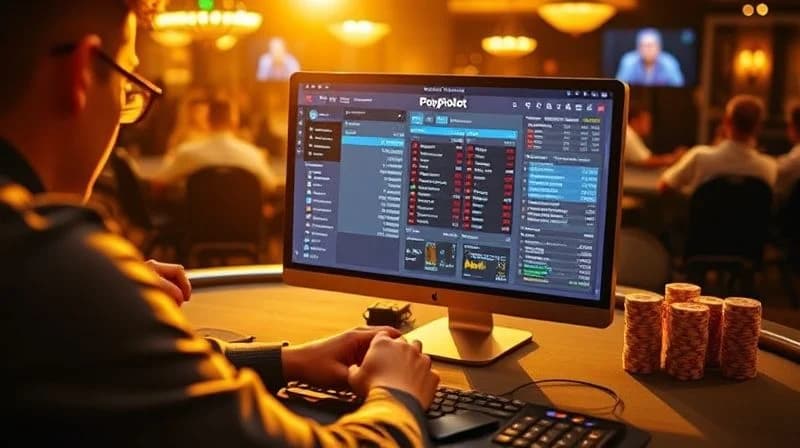
Poker Copilot 8: Five Reasons Why It's a Poker Software Worth Choosing
Poker Copilot 8 is a tracker and HUD software compatible with major poker rooms, easy to install and powerful. This article introduces five core advantages: intuitive and easy to use, rich statistics, cross-platform support, quick installation, and reliable compatibility.

Pros and Cons of Multi-Tabling Poker: Does More Tables Really Equal More EV?
In the past, multi-tabling online poker was seen as a way to reduce variance and achieve stable profits, but nowadays more and more players question whether extreme multi-tabling comes at the cost of decision-making quality. This article explores the history, advantages, and potential pitfalls of multi-tabling.

Poker Beginner Learning Roadmap: From Zero to 6-Max Cash Game Introduction Guide
A poker novice posted on Reddit seeking advice on how to systematically learn Texas Hold'em from scratch, including platform selection, learning priorities, free resources, tools and software, and communities. This article compiles common suggestions to provide a beginner's guide.

What Stakes Do Beginners Play? Analyzing the Distribution of 'Fish' in Online Poker
What cash levels do beginner players typically play online? Based on industry consensus, this article analyzes that well-funded beginners 'fish' often appear at 1/2, 2/5, or even higher stakes, while most beginners start at micro stakes. Understanding this helps identify recreational players.
Reddit user seeks HUD Poker recommendations
Reddit user posted asking for HUD Heads-Up Display recommendations in online poker. The post includes an image but no text. HUD is typically used to track opponent data, common software includes Hold'em Manager and PokerTracker.

PLO 6-Max HUD Stats Guide: Which Statistics Are Most Useful?
Pot-Limit Omaha PLO players on Reddit discuss the best HUD statistics for 6-max tables, including key data like VPIP, PFR, 3bet, as well as sample size recommendations. This article summarizes the poker community's experience and common strategies to help players optimize data usage.

How to Build a Sustainable Profit Model in Poker
This article elaborates on the core elements of a sustainable poker profit model: bankroll management, technical advantage, emotional control, game selection, and review optimization. It also provides practical examples and analysis of common misconceptions to help players build a long-term stable profit system.