Allen 'Chainsaw' Kessler
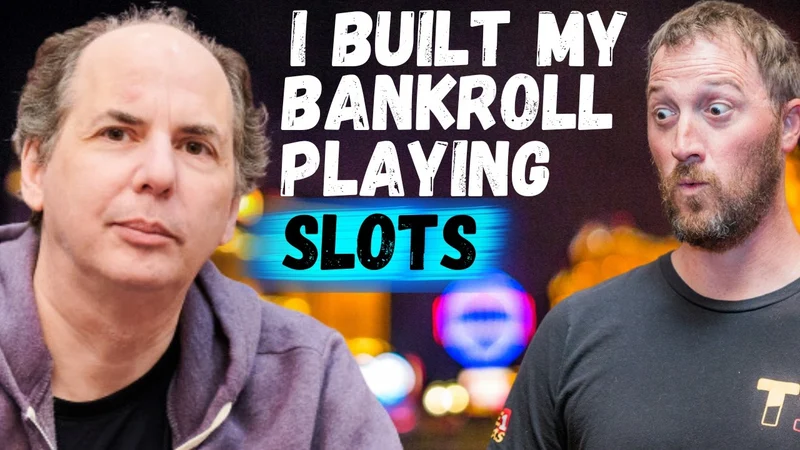
Allen Kessler shares his journey from weekend Atlantic City trips to a life of poker, slots, and tournament structure advocacy on the Table One Podcast.
Allen 'Chainsaw' Kessler is one of those players whose career cannot be summed up in a single sentence—he’s a grinder, mixed-game specialist, gambler, tournament structure critic, and a player who, in a single month, can achieve results that many professionals would envy over a year.
Kessler grew up in Montgomery County, Pennsylvania, with a natural affinity for games. He spent hours playing backgammon with his sister, gravitating toward formats where logic, observation, and decision-making under pressure were key. Before college, he joined a Monday night game, engaging mainly in high-low variants. After school, he attended Penn State Abington and later Temple, but academics were never his main focus. More than a career as a lawyer or doctor, he was drawn to the idea of owning a business and practical earning. He ended up in a marketing research firm conducting telephone surveys, starting as a caller making a few dollars an hour.
Atlantic City as a Weekend Routine
The path to casinos came through his work rhythm. Kessler worked Monday to Friday and every Friday after work, he’d drive to Atlantic City. He spent the whole weekend there playing slots, video poker, and live poker, returning to work on Monday morning. He describes it not as a vacation or occasional gambling, but as a regular second shift, building his bankroll, gaining experience, and nurturing his relationship with the casino environment. The crucial part was not viewing it as pure gambling. At that time in Atlantic City, there were video poker games and promotions that, when approached correctly, offered significantly better value than today. Kessler describes how mentor Steve Norden taught him to think about video poker and similar games, where if played correctly, the losses were minimal or nonexistent while accruing bonus credits, free rooms, and meals.
Kessler later recalls flying to Las Vegas on weekends to play in promotions at the Mirage, Treasure Island, and Bellagio. In one Jaguar promotional campaign, he chose a banana at the back of a tree, believing the organizers would hide the winning key in the most challenging spot. His intuition was right, and he won the car.
Eleven Days That Built a Bankroll
His strongest casino story involves a promotion at the Claridge. From midnight to 2 a.m., jackpots were doubled, tripled from 2 to 4 a.m., and quadrupled from 4 to 6 a.m. Kessler found a game with frequent jackpot thresholds and quickly realized the promotion was poorly designed. He started at lower limits, then with a friend moved to $5 machines, eventually discovering $25 machines in a corner where the math improved further. He took sick leave for eleven days and played nearly nonstop. He claims the result was several hundred thousand dollars, marking a pivotal moment in establishing his bankroll.
Alongside video poker and promos, Kessler gradually advanced in live poker. At the Taj Mahal, he played 100/200 Stud 8/Omaha 8 during a time when players like Phil Ivey and John Hennigan were at the table. The game later grew to 200/400 and higher, but Kessler stayed within his comfort zone. He often left his money directly in a safety box as black chips. Upon returning a week later, the chips were still there, and he continued playing.
Kessler doesn't portray himself as the loudest genius at the table. Rather, he is a grinder who hadn’t needed to extract, spend, or flaunt his winnings. He maintained a bankroll, kept cash flow separate from work income, and allowed his winnings to compound. Meanwhile, his regular job paychecks accumulated in an untouched account. This is the Kessler paradox: he appears as a nonstop gambler, yet his fundamental approach to his bankroll was extremely conservative.
First WSOP Cash and Transition to Tournament Life
His first significant encounter with tournament poker came when he flew to the WSOP to play a $5,000 Omaha 8 event. Never having played such a tournament format before, but having years of Omaha 8 cash game experience, he took on players like Phil Ivey, Scotty Nguyen, Phil Hellmuth, and others. Without sleep and lacking extensive tournament experience, he managed a deep run and secured his first WSOP cash. That moment naturally drew him into the world of tournaments.
Later, he began traveling for WPT events during the Foxwoods, Mirage, Mandalay Bay, and Bay 101 era—stops featuring money, prestige, and television exposure. Kessler talks about final tables, runner-runner losses, and scenarios where he was just steps away from a TV table. During that time, he also played no-limit, but his natural environment remained elsewhere: split pots, stud, Omaha 8, razz, triple draw, and mixed games.
Crusade for Better Structures
If there’s one poker theme Kessler is associated with, it's tournament structures. In conversations, he repeatedly discusses which events he plays, which he boycotts, and why. For him, if a triple draw event has 25,000 in chips and starts at 400/800, it's principle that keeps him from supporting such a tournament. It’s not just a personal preference but a long-standing effort to press organizers to ensure mixed-game events have meaningful playability. He mentions that Jack Effel at the WSOP once told him to write how he’d like mixed structures changed, and they’d try it. Kessler claims a significant influence on ante system changes in stud games and the format of some WSOP mixed events.
He talks about his Chainsaw Mixed Series, tournaments in Orleans, Planet Hollywood, and Caesars, a leaderboard, custom trophies, and an effort to create an entire mixed-game window ahead of the WSOP. His goal is clear: for players to arrive in Vegas early, warm up in Big O, TORSE, five-way triple draw, and other formats, and smoothly transition into the World Series.
Kessler openly dislikes limit hold'em in tournaments and asserts that a format replacing it with triple draw has more future potential. TORSE—triple draw, Omaha, razz, stud, stud eight—has gradually gained traction, with players responding better to these formats compared to HORSE events. He even recalls a bet with Shaun Deeb, who doubted a WSOP TORSE event would attract sufficient turnout. Kessler won the bet when the event exceeded expectations.
The Bracelet that Remains Elusive
Kessler boasts hundreds of cashes, numerous final tables, and several WSOP runner-up finishes, but the bracelet remains elusive. In the interview, he walks through four second-place finishes, each with its own sting. Facing Todd Brunson in Omaha 8, he describes a heads-up where the opponent repeatedly hit cards for splits or saves. Against Frank Kassela in the $10K Stud 8, the narrative twists as Kessler claims he persuaded him to late reg the event, only to lose the heads-up battle for the bracelet and Kassela’s Player of the Year points. Facing Brian Rast in pot-limit hold'em, he talks about a hand that could've entirely reshaped his career. Perhaps the most painful is the WSOP Europe PLO runner-up. Kessler was the chip leader, filming stopped due to technical issues, and after a break, he returned to a full house over full house, losing by one card. Though he downplays it, it’s clear the bracelet question is still open.
Kessler no longer needs to prove he can play, cash, or travel for volume. But that single bracelet remains a story his career has yet to close.
Kessler is naturally a topic for the 25K Fantasy. He explains he typically goes for low sums in drafts, even though he plays almost daily, including many mixed and $10K events. Shaun Deeb reportedly spread a notion that while Kessler has good floor value, he lacks a strong ceiling—capable of accumulating points but unlikely to explode with 150 or 200. Kessler disagrees, arguing simply: at the WSOP, he plays every day, doesn’t leave mid-series, doesn’t burn out, nor stop playing due to family or bankroll. He’s sold part of his action, has money in his account, and if he says he’ll play certain tournaments, he plays them.
Slots, Buffalo, and a $1.2 Million Jackpot
No interview with Kessler would be complete without talking slots. In this episode, he recounts his massive hit on Buffalo Power at Thunder Valley, where he initially showed up for a $400 HORSE event but found late registration closed at the first break. Angry, he went to the casino, spotted a high green jackpot, and decided to play until he hit it. Hours passed, bonuses were bought again and again, the bankroll dwindled, and by 3 a.m., he was down $14,000 by his account. Then, a player appeared on the adjacent machine, they started talking, and the energy changed. Kessler finally spun the wheel, and instead of the usual “almost” moment, the wheel landed precisely on $1.2 million. The payout took hours, requiring verification from Aristocrat, but eventually, he received his money in a reduced lump sum.
Asked whether he’d choose poker or slots for the rest of his life, Kessler answers without hesitation: slots. He claims he spends at least 350 days a year outside of the WSOP at the casino with slots “talking” to him. It’s half-joke, half genuine philosophy from a player living between gambling, professional play, and pure casino routine.
FAQ
- Allen Kessler is a professional poker player known for his expertise in mixed games, his advocacy for better tournament structures, and his frequent presence at casinos, playing both poker and slots.