Pocket 6s
Editor: dezhoupuke.orgRelated Glossary
MDF
MDF
MDF Minimum Defense Frequency is the minimum % of hands you must continue with to stop a bluff from profiting. It's not…
Two-Thirds Pot
Two-Thirds Pot
Term: Two-Thirds Pot Bet A two-thirds pot bet refers to a bet size approximately 66% of the current pot, one of the mos…
Minimum Defense Frequency
Minimum Defense Frequency
In practice, MDF helps players balance their strategies between folding, calling, and raising, avoiding being too frequ…
Light 4-Bet
Light 4-Bet
A light 4-bet is a 4-bet made with a hand weaker than typical value hands, often as a bluff to force folds or balance a…
Polar 3-Bet
Polar 3-Bet
The core idea is to make it difficult for opponents to judge your hand strength, thereby applying maximum pressure post…
Pot Geometry
Pot Geometry
Pot Geometry is a bet sizing strategy that structures bets on earlier streets to enable an all-in bet on a later street…
Abstraction
Abstraction
Abstraction in poker refers to the deliberate simplification of the game by reducing the number of possible actions, be…
Medium Stack Jam
Medium Stack Jam
A preflop all-in shove from a player with a medium stack size typically 20-35 big blinds, used to apply pressure and av…
Related Strategy
Practical Application of Minimum Defense Frequency MDF in Texas Hold'em
Practical Application of Minimum Defense Frequency MDF in Texas Hold'em: Win Rate, Common Mistakes, Applicable Scenarios, and FAQ — Minimum Defense Frequency MDF is a key concept to prevent opponents from automatically profiting. This article explains from definition and calculation to pre-flop and post-flop practical applications, detailing how to use MDF to build balanced defense ranges, and points out common misconceptions and adjustment methods.
UTG vs BB Single Raised Pot: Third Street Value Betting Strategy
This article focuses on third street turn value betting strategy in UTG vs BB single raised pots after the flop. It analyzes range advantage, board structure, bet sizing, and exploitative adjustments to help players maximize value and avoid over-bluffing.
Deep-stacked Cash Game 150bb+ Preflop Strategy Adjustment Guide
When stack depth exceeds 150 big blinds, conventional preflop strategy needs significant adjustments. This article details key techniques such as raise sizing, hand range, 3-bet responses and cold calling, helping you build an edge in deep-stacked cash games.
Short Deck 6+ Preflop Range Chart: Strategy and Adjustment Guide
Short Deck 6+ Short Deck poker rules and probabilities are significantly different from regular Texas Hold'em, requiring recalibration of preflop ranges. This article, based on 6-max, gives tight-aggressive 15%-25% and aggressive 25%-35% range suggestions from UTG to BB, and explains why suited connectors increase in value and why pair equities shrink. Includes practical adjustment tips, suitable for players transitioning from regular Texas Hold'em.
The Golden Rule of River Bluff Frequency and Bet Sizing
The river is one of the most critical decision points in Texas Hold'em. This article delves into the optimal relationship between bluff frequency and bet sizing on the river. Using pot odds, blockers, and range analysis, it teaches you how to construct a balanced bluffing strategy, avoid over-bluffing or under-bluffing, and improve long-term profitability.
Minimum Defense Frequency MDF and Break-Even Defense Strategy
Detailed explanation of the concept, calculation method, and practical application of Minimum Defense Frequency MDF, helping players find the optimal defense frequency when facing bets to avoid being exploited.
The Art of Thin Value Betting on the River: Key Techniques for Maximizing Profit
This article deeply explores techniques for thin value betting on the river in Texas Hold'em, including how to evaluate opponent ranges, calculate the threshold for value betting, select bet sizes, and avoid common pitfalls. Through practical examples, it helps you extract extra profit from marginal hands and improve your overall win rate.
SB vs BB Limp Pot: Small Blind vs Aggressive Defense Strategy
The SB vs BB limp pot is a common preflop scenario. This article explains from both SB and BB perspectives the limp range, raise sizing, and post-flop adjustments to help you effectively limp from the small blind and respond to the big blind's squeezes and counters.
Flop Betting Frequency Table: UTG vs BB Heads-Up Pot Strategy
This article uses the UTG vs BB heads-up pot as an example to construct a flop betting range and frequency table. It explains range construction logic, adjustment factors, and GTO references to help players make optimal decisions on common flops like J-T-2 rainbow.
Flop Range Betting Frequency Table: CO vs BB Full Guide
This article uses the example of a flop scenario where CO opens and BB calls, explaining in detail how to construct a reasonable betting range, balance value and bluffs, and provides GTO reference frequencies and practical adjustment factors to help players improve flop decision-making.
Flop Range Betting Frequency Table: CO vs BB on T-7-2 Rainbow Board
This article uses the example of a heads-up pot between CO and BB on a T-7-2 rainbow flop to detail the construction of a flop continuation betting c-bet frequency table. It covers GTO reference frequencies, hand range division value/bluff, adjustment factors, and practical applications to help players optimize their betting decisions in various exploitative scenarios.
Big Blind Defense Strategy: How to Counter Steals from Different Positions
The big blind is the last line of defense preflop, and different positions require different responses to steals. This article systematically explains big blind defense strategy from the perspectives of position ranges, pot odds, postflop playability, etc., and provides practical adjustments to help you protect your blinds without being too loose-passive.
Related Players
' width='512' height='512'/%3E%3Ctext x='256' y='256' text-anchor='middle' dominant-baseline='central' font-family='system-ui,sans-serif' font-size='240' font-weight='bold' fill='hsl(314,30%25,85%25)'%3EGS%3C/text%3E%3C/svg%3E)
Gerd Singer
 Germany
Gerd Singer is a German professional poker player with live tournament earnings exceeding $66,000. He achieved his career-best result in 2023 by winning the German Poker Days Main Event at King's Resort Rozvadov, earning €57,650 and a WSOPE Main Event ticket.
' width='512' height='512'/%3E%3Ctext x='256' y='256' text-anchor='middle' dominant-baseline='central' font-family='system-ui,sans-serif' font-size='240' font-weight='bold' fill='hsl(55,30%25,85%25)'%3EME%3C/text%3E%3C/svg%3E)
Matthew Edge
 United States
Matthew Edge, American poker player, world ranking 10290, career total earnings $326,715. Known for stable style, achieved good results in small tournaments.
' width='512' height='512'/%3E%3Ctext x='256' y='256' text-anchor='middle' dominant-baseline='central' font-family='system-ui,sans-serif' font-size='240' font-weight='bold' fill='hsl(201,30%25,85%25)'%3ELV%3C/text%3E%3C/svg%3E)
Larry Vincent
United States
Larry Vincent is an American poker player from Lewiston, Idaho, with total live earnings of $66,832 and a best cash of $41,422. He has competed in various live tournaments, primarily in the United States, and is ranked 49th on the Idaho All Time Money List.
' width='512' height='512'/%3E%3Ctext x='256' y='256' text-anchor='middle' dominant-baseline='central' font-family='system-ui,sans-serif' font-size='240' font-weight='bold' fill='hsl(206,30%25,85%25)'%3ESS%3C/text%3E%3C/svg%3E)
Stephen Sullo
United States
Stephen Sullo is an American poker player from West Hartford, Connecticut, with live tournament earnings of $66,307. His largest cash to date is $26,400. He also works as an estimator at Tocco Corporation.
' width='512' height='512'/%3E%3Ctext x='256' y='256' text-anchor='middle' dominant-baseline='central' font-family='system-ui,sans-serif' font-size='240' font-weight='bold' fill='hsl(297,30%25,85%25)'%3EAP%3C/text%3E%3C/svg%3E)
Andy Pokrivnak
United States
Andy Pokrivnak is an American poker player from Orlando, Florida, with total live tournament earnings of $66,949. He is best known for winning the Short Deck Hold'em Championship at Run It Up Reno VIII in 2019, earning $5,083, and has a best live cash of $17,400.
' width='512' height='512'/%3E%3Ctext x='256' y='256' text-anchor='middle' dominant-baseline='central' font-family='system-ui,sans-serif' font-size='240' font-weight='bold' fill='hsl(139,30%25,85%25)'%3EJC%3C/text%3E%3C/svg%3E)
Jacques Cornelis
United States
Jacques Cornelis is an American poker player known for participating in the 2008 World Poker Challenge, a World Poker Tour event, where he advanced to Day 2 with a chip stack of 66,100. Limited public information is available about his career and playing style.
' width='512' height='512'/%3E%3Ctext x='256' y='256' text-anchor='middle' dominant-baseline='central' font-family='system-ui,sans-serif' font-size='240' font-weight='bold' fill='hsl(186,30%25,85%25)'%3EAP%3C/text%3E%3C/svg%3E)
Alex Popovich
United States
Alex Popovich is an American poker player and gaming technology inventor from Mundelein, Illinois, with over $66,000 in live tournament earnings and 17 WSOP cashes. Beyond the felt, he holds 30 patents in casino gaming systems and has worked as a software engineer for IGT and other gaming companies, leveraging his computer science background to innovate in the industry.
' width='512' height='512'/%3E%3Ctext x='256' y='256' text-anchor='middle' dominant-baseline='central' font-family='system-ui,sans-serif' font-size='240' font-weight='bold' fill='hsl(196,30%25,85%25)'%3ETD%3C/text%3E%3C/svg%3E)
The Dan Chu
 Vietnam
The Dan Chu is a Vietnamese poker player with a Somuchpoker Poker Index (SPI) of 3,663, ranking #667 globally. He has cashed in all 13 live events he has attended, accumulating a net worth of $24,760 in Asia-Pacific tournaments with a biggest win of $10,630. Chu competes regularly in major Asian tours such as the Vietnam Poker League and Royal Poker Tour.
Related News
Facing a Raise on the River, Should KQ Bluff Catch? - 1/3 Hand Analysis
A Reddit user shares a 1/3 cash game hand: Hero in BB calls with KQo, flop J-K-6 checks, turn bets 15, river bets 15 then faces a raise to 50. Should Hero call? This article analyzes opponent's range and Hero's decision.

WSOP Ladies Championship Four-Way Pot Flops Beat AA: Reddit Hot Hand
In the WSOP Ladies No-Limit Hold'em Championship, a hand with four players in the pot where the flop beat AA became a hot topic on Reddit. This article analyzes the background of the hand and poker strategies in multiway pots.
WSOP 2026: Calvin Anderson Crowned Second Double Champ of the Series
The 2026 WSOP weekend saw its second double champion — Calvin Anderson won back-to-back titles in the Razz and H.O.R.S.E. events, raising his total gold bracelet count to seven. This article recaps recent event results and previews upcoming highlights: the $1M Mystery Bounty event, Team event, Ladies event, and more.
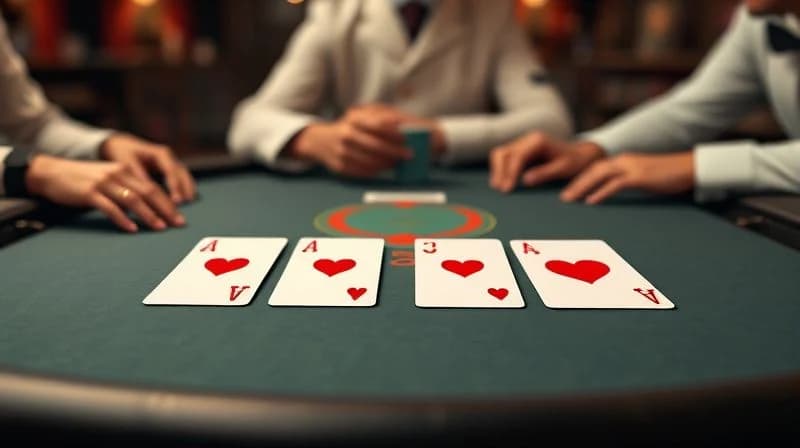
25NL Hand Analysis: Pre-flop 3-bet Pot, How to Respond to a Five-Flush Board on the River?
This article analyzes a 25NL hand: CO calls SB's 3-bet with 66, flop Q♥4♥T♥, turn J♥, river 3♥, making a five-flush board. After opponent checks three times, hero makes a small bet, opponent shoves. The article explores the logic and decision-making behind each action.

Fox, Boivin, Cheong lead Partypoker Mini Main Event Day 2 chip top ten
The Partypoker Millions Online Series Mini Main Event concluded Day 1 with 169 players advancing to Day 2, each guaranteed at least $2,105. Colombian player Sebastian Henao leads with 27 million chips, followed by notable players such as Elio Fox, Thomas Boivin, Joseph Cheong, etc. The champion's prize is $184,507.
2026 WSOP Double Champion Naoya Kihara Leads Player of the Year Race, Shaun Deeb Close Behind
Halfway through the 2026 WSOP schedule, Japanese player Naoya Kihara leads the Player of the Year standings with two gold bracelets 1665 points, with Shaun Deeb close behind at 1596 points. This article analyzes the current top 10 rankings and POY prize structure, including a $100,000 Paradise tournament package and other generous prizes.

WSOP 2026 Update: Series Sees First Double Champion
On Day 17 of the 2026 WSOP, Japanese player Naoya Kihara won his second gold bracelet of the series, becoming the first double champion of the summer. Kristen Foxen, Artur Martirosian, and others also achieved success. Key upcoming events include the $250,000 Super High Roller tournament.

Paired Board Complete Strategy Guide
In-depth analysis of the definition, principles, and strategy adjustments for preflop, flop, turn, and river on paired boards, covering real-world examples and common misconceptions to help you make optimal decisions when the board pairs.

Texas Hold'em Combinatorics: Accurately Calculating Opponent Hand Ranges
Combinatorics is a core tool for quantifying the likelihood of an opponent's hand in Texas Hold'em. Starting from the definition, this article explains combinatorics principles, practical calculation examples, and common misconceptions to help you read hands and make decisions more accurately.

Expected Value Maximization MaxEV Strategy: Optimal Decision Logic in Texas Hold'em
The MaxEV strategy is a core decision-making framework for pursuing long-term profitability in Texas Hold'em. It calculates the average expected value of each action through mathematical computation and selects the play with the highest EV. This article explains its definition, mathematical principles, practical applications, and common misconceptions.

UTG Opening Range Construction: Correct Choices for the Tightest Position
UTG Under the Gun is the most disadvantageous position preflop. Constructing a reasonable opening range is key to avoiding big mistakes. This article starts with definitions and principles, provides typical range examples, analyzes common misconceptions, and helps you master the correct strategy for the tight position.

Early Stage Hyper Turbo Tournament Strategy
The early stages of Hyper Turbo tournaments require aggressive strategies due to extremely high blinds and shallow stack depths. This article explains definitions, principles, practical examples, and common misconceptions to help you quickly accumulate chips.