Draw
Editor: dezhoupuke.orgRelated Glossary
Draw
Draw
Draw A draw refers to a situation where a player's current hand has not yet made a made hand but has the potential to i…
Backdoor Draw
Backdoor Draw
A backdoor draw also known as a runner-runner draw is a poker hand that requires two specific cards on the turn and riv…
Drawing Dead
Drawing Dead
A situation in poker where a player's hand cannot possibly win the pot, even if they complete their draw to the best po…
Front-Door Flush Draw
Front-Door Flush Draw
In practice, this means the player has 9 outs to complete the flush from the flop onward. It is one of the strongest dr…
Backdoor Flush Draw
Backdoor Flush Draw
In practice, the value of a backdoor flush draw lies in its ability to increase the hand's potential equity. It can ser…
Double Gutshot
Double Gutshot
Term: Double Gutshot A double gutshot is a type of draw where a player's hand, combined with the community cards, creat…
Nut Flush Draw
Nut Flush Draw
Nut Flush Draw A nut flush draw refers to a flush draw that, if completed, becomes the nut flush the highest possible f…
Non-Nut Flush Draw
Non-Nut Flush Draw
Term: Non-Nut Flush Draw A non-nut flush draw refers to a situation where a player is drawing to a flush that is not th…
Runner
Runner
Term: Runner Runner refers to a draw that needs to hit two consecutive cards after the flop to win, usually a backdoor …
Wheel Draw
Wheel Draw
A hand that contains four of the five cards needed to form a wheel A-2-3-4-5 straight, giving the player a chance to co…
Broadway Draw
Broadway Draw
A drawing hand that has the potential to make the highest possible straight in poker, Ace-high A-K-Q-J-10.
PLO Nut Wrap
PLO Nut Wrap
In Pot-Limit Omaha, a hand that currently holds the nuts on the flop but also has numerous outs to improve to even stro…
Related Strategy
Implied Odds Calculation for Draws
Teaches you how to correctly calculate implied odds for draws, understand the potential profit from future bets, and use mathematical decision-making instead of guessing to improve long-term profitability.
Low Board Big Blind Defense
When the board is low flop cards all below 9 and no Ace, defending the big blind becomes more difficult but is also key to profitability. This article explains how to construct a defense range, respond to different bet sizes, timing, and common mistakes, helping you turn the tables from a disadvantageous position.
Implied Odds Calculations for Draws
Implied odds are a key concept in Texas Hold'em for evaluating the value of draws, combining pot odds with future winnable chips. This article details the principles of implied odds, calculation formulas, influencing factors, and practical applications to help you make more accurate decisions on whether to chase draws.
Decision Framework for Folding Drawing
Should you continue with a drawing hand on the turn? This article provides a decision framework evaluating pot odds, implied odds, reverse implied odds, opponent range, and board structure to help identify situations where folding a drawing hand is correct, avoiding long-term losses.
Semi-bluffing with Draws in Multiway
Learn how to effectively use draws for semi-bluffing in multiway pots. Covers suitable scenarios, bet sizing, opponent range analysis, and risk control to help you maximize EV in multiway pots.
Short Deck 6+ Flush Draw Practical
Short deck 6+ poker removes 2-5, making flush draws more probable but also increasing the strength of made hands. This article details flush draw play on the flop and turn, including pot odds calculation, position influence, reverse implied odds, and how to incorporate balancing strategy.
Check Range Strategy on Wet Boards
On wet boards, the check range needs to include more value hands and draws to balance protection and bluffing. This article explains how to construct a check range to avoid being exploited, and illustrates adjustment methods with practical examples.
Range Advantage and Nut Advantage
This article explains the concepts of range advantage and nut advantage, using the example of button vs big blind on an A♠K♠9♣ flop, demonstrating how to leverage these advantages to construct a balanced range of value and bluffs, including adjustment factors and GTO references.
Decision Framework for Folding Draws on
The turn is a critical decision point for draws. This article proposes a systematic framework from seven dimensions: pot odds, implied odds, reverse implied odds, opponent range, board texture, position, and stack depth, to help players determine when to fold draws, avoid unnecessary losses, and improve long-term profitability.
Turn Fold Drawing Hands Framework
The turn is a watershed for drawing hands. This article provides a decision framework combining pot odds, implied odds, opponent range, and reverse implied odds to help you rationally fold losing draws on the turn and avoid overpaying.
Implied Odds Calculation for Draws
This guide systematically explains the concept and calculation method of implied odds in drawing scenarios. From basic principles to practical applications, with specific numerical examples, it helps you accurately evaluate the value of chasing draws and avoid long-term losses.
Turn Fold Drawing Hand Decision
In Texas Hold'em, the turn is a critical decision point for drawing hands. This article builds a systematic decision framework to help players evaluate whether to fold a drawing hand, covering pot odds, implied odds, reverse implied odds, opponent range, position and stack depth, etc., to avoid blindly chasing draws that lead to losses.
Related Players
' width='512' height='512'/%3E%3Ctext x='256' y='256' text-anchor='middle' dominant-baseline='central' font-family='system-ui,sans-serif' font-size='240' font-weight='bold' fill='hsl(74,30%25,85%25)'%3EBB%3C/text%3E%3C/svg%3E)
Billy Baxter
 United States
Billy Baxter is an American professional poker player and seven-time World Series of Poker bracelet winner, inducted into the Poker Hall of Fame in 2006. Known for his expertise in lowball variants like Deuce-to-Seven Draw and Razz, Baxter also famously staked Stu Ungar to his 1997 Main Event victory and won a landmark tax case classifying poker winnings as earned income.
' width='512' height='512'/%3E%3Ctext x='256' y='256' text-anchor='middle' dominant-baseline='central' font-family='system-ui,sans-serif' font-size='240' font-weight='bold' fill='hsl(230,30%25,85%25)'%3EAB%3C/text%3E%3C/svg%3E)
Alejandro Burzaco
 Argentina
Alejandro Burzaco is an Argentine poker player who primarily competes in live tournament events. His most notable recorded result came in 2026, finishing 7th in the $600 Mixed Triple Draw event at the WPT Seminole Hard Rock Poker Showdown for $1,545.
' width='512' height='512'/%3E%3Ctext x='256' y='256' text-anchor='middle' dominant-baseline='central' font-family='system-ui,sans-serif' font-size='240' font-weight='bold' fill='hsl(24,30%25,85%25)'%3EKH%3C/text%3E%3C/svg%3E)
Kazumasa Higuma
 Japan
Japan
Kazumasa Higuma is a Japanese professional poker player known for his strong performances in mixed game variants on the Asian Poker Tour. With over $39,000 in live earnings from 7 events and 6 in-the-money finishes, he has achieved notable runner-up finishes in 2025 including a second place in the APT Incheon Hyper Turbo PL Courchevel Hi-Lo and a second place in the APT Taipei Draw Poker Masters. Higuma also won the Limit Triple Draw Lowball Mix event at the 2024 APT Taipei Poker Classic.
' width='512' height='512'/%3E%3Ctext x='256' y='256' text-anchor='middle' dominant-baseline='central' font-family='system-ui,sans-serif' font-size='240' font-weight='bold' fill='hsl(299,30%25,85%25)'%3EAS%3C/text%3E%3C/svg%3E)
Andrey Skrivel
 Russia
Andrey Skvortsov, known online as 'Premove', is a Russian poker player with 16 COOP titles on PokerStars, including 11 SCOOP and 5 WCOOP championships. He specializes in mixed games and draw variants, with live earnings of $13,999.
' width='512' height='512'/%3E%3Ctext x='256' y='256' text-anchor='middle' dominant-baseline='central' font-family='system-ui,sans-serif' font-size='240' font-weight='bold' fill='hsl(55,30%25,85%25)'%3ERV%3C/text%3E%3C/svg%3E)
Rajashekar Varakala
United States
Rajashekar Varakala is an American poker player from Irving, Texas, known for his success in Texas Card House events, particularly in No Limit 2-7 Single Draw and Pot Limit Omaha. He has amassed over $20,000 in career earnings and leads the PokerAtlas Tour leaderboard with three event wins.
' width='512' height='512'/%3E%3Ctext x='256' y='256' text-anchor='middle' dominant-baseline='central' font-family='system-ui,sans-serif' font-size='240' font-weight='bold' fill='hsl(346,30%25,85%25)'%3EAD%3C/text%3E%3C/svg%3E)
Adam Darkazalli
United States
Adam Darkazalli is an American poker player known for deep runs in regional tournaments, including a 5th-place finish in a WSOP Circuit Omaha Hi-Lo event and multiple final-table appearances at Foxwoods. His recorded live earnings exceed $33,000 across a modest number of cashes.
' width='512' height='512'/%3E%3Ctext x='256' y='256' text-anchor='middle' dominant-baseline='central' font-family='system-ui,sans-serif' font-size='240' font-weight='bold' fill='hsl(5,30%25,85%25)'%3EBD%3C/text%3E%3C/svg%3E)
Brandon Delnano
United States
Brandon Delnano is an American professional poker player known for his steady presence in high-stakes cash games and mixed-game tournaments. With seven World Series of Poker cashes totaling over $40,000, he has demonstrated skill across disciplines like Pot-Limit Omaha and Lowball Triple Draw. Delnano also made deep runs in high-roller events, including the 2021 WSOP $10,000 Short Deck tournament.
' width='512' height='512'/%3E%3Ctext x='256' y='256' text-anchor='middle' dominant-baseline='central' font-family='system-ui,sans-serif' font-size='240' font-weight='bold' fill='hsl(311,30%25,85%25)'%3ESB%3C/text%3E%3C/svg%3E)
Sandra Boyd
United States
Sandra Boyd is an American poker player from Williamsburg, Virginia, with multiple cashes in WSOP Circuit events and other live tournaments. She has shown resilience in tournaments, being the last woman standing in some fields.
Related Events
Triton PLO Main Event
Triton Poker, in collaboration with WSOP, hosts a high-stakes Pot-Limit Omaha main event in the Bahamas with a buy-in of $100,000, providing a high-level competitive platform for top PLO players.
Event #7: $1,500 No-Limit 2-7 Single
An event in the 2026 World Series of Poker (WSOP) with a $1,500 buy-in, featuring No-Limit 2-7 Single Draw poker rules. This is a lowball game where the goal is to make the lowest possible 5-card hand, with one draw allowed.
Related News
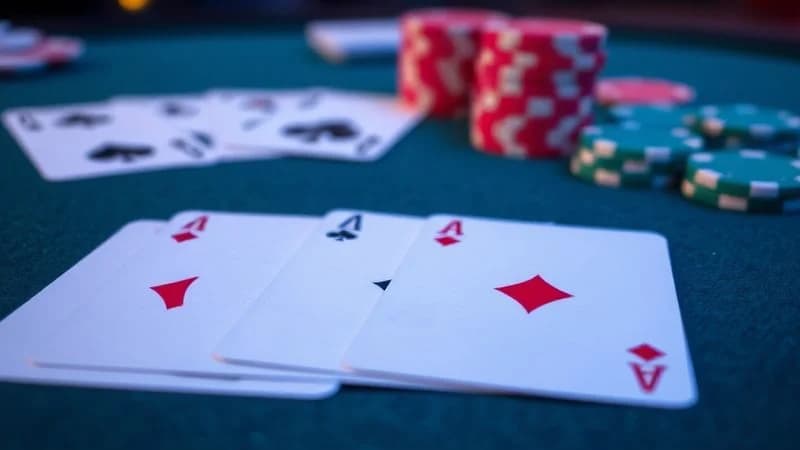
Accidentally Signed Up for a PLO
For beginners who accidentally signed up for a PLO tournament, this guide provides quick-start strategies covering game characteristics, hand selection, post-flop play, etc. It emphasizes less bluffing and focusing on nut potential to help you quickly adapt to PLO in a short time.
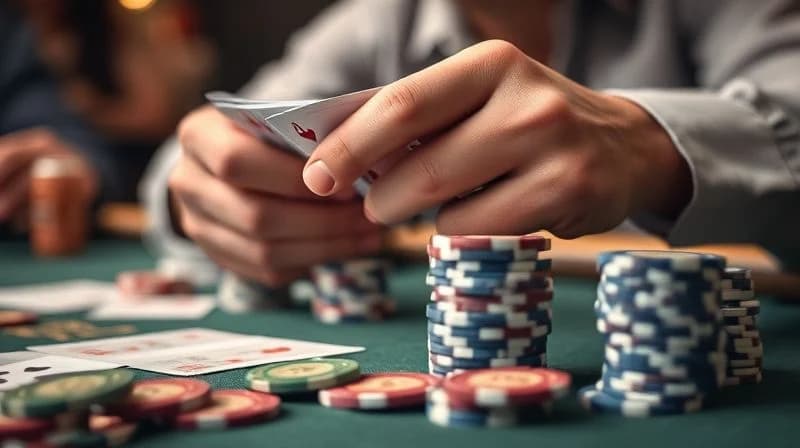
Live 5/5/10 PLO
In a 5/5/10 Pot-Limit Omaha game, Hero hits top two pair and a gutshot straight draw on the turn. Facing an unknown opponent's lead bet, should they call? This article analyzes the hand details and decision logic.

Complete Analysis of Three Broadway
In-depth analysis of post-flop strategy when three broadway cards e.g., AKQ appear on the board, covering range analysis, bet sizing, common mistakes, and practical examples, helping players find balance between strong hands and potential bluffs.

Rainbow Board Strategy
This article systematically explains the definition and principles of rainbow boards, as well as betting, calling, and bluffing strategies when there is no flush draw, combined with practical examples and common mistakes, to help players make optimal decisions on the flop.

Complete Analysis of Monotone Board
This article provides in-depth explanations of its definition, probability principles, attack and defense strategies, common mistakes, and practical examples, helping players make correct decisions on the flop, turn, and river.

Paired Board Complete Strategy Guide
In-depth analysis of the definition, principles, and strategy adjustments for preflop, flop, turn, and river on paired boards, covering real-world examples and common misconceptions to help you make optimal decisions when the board pairs.

Call and Bet Frequency on Two-tone
Two-tone board is a flop with two cards of the same suit, which significantly impacts player strategy. This article explains its definition, principles, practical strategies, and common misconceptions to help players optimize their call and bet frequencies.

Value Difference Between Suited and
This article delves into the value difference between suited and unsuited starting hands in Texas Hold'em, covering definitions, principles, practical examples, and common misconceptions to help players understand the advantages of suited hands and how to use them correctly.

Dry vs Wet Board
This article explains in detail the definition, principles, practical examples, and common misconceptions of dry and wet board in Texas Hold'em, helping you make better decisions based on board texture.

Outs Calculation in Poker
This article systematically explains the definition of Outs in poker, the calculation method 4-2 rule, practical applications, and common misconceptions, helping players quickly evaluate drawing probabilities and make better decisions.

Post-flop Outs and Pot Odds
The Rule of 4 and 2 is a technique for quickly estimating the win rate of a drawing hand post-flop: on the flop, multiply the number of outs by 4 to get an approximate win rate to the river; on the turn, multiply by 2 to get the river win rate. This article explains its principles, practical applications, and common misconceptions.

Texas Hold'em Raising Size Theory
This article explains the core principles of raising size, analyzes the strategic intentions of big vs small bets in different situations, uses practical examples to show how to adjust sizing based on board texture, range, and opponent, and points out common mistakes to help players optimize their decisions.