Polarized Range
Editor: dezhoupuke.orgRelated Glossary
3BET
3BET
A 3-bet is the first re-raise after an open-raise. In position a common size is about 3x the open; out of position abou…
Polarized Range
Polarized Range
A polarized range contains only very strong hands and weak hands, with few medium-strength hands. It is not the same as…
Merged Range
Merged Range
A merged range contains strong made hands and medium-strength hands, betting for value and protection. It is the opposi…
Value Bet
Value Bet
A value bet is a bet that gets called by worse hands often enough to print. It is not any bet with a pair.
Polar 3-Bet
Polar 3-Bet
The core idea is to make it difficult for opponents to judge your hand strength, thereby applying maximum pressure post…
Merged Bluff
Merged Bluff
A merged bluff is a betting strategy where a player uses a balanced range that includes both value hands and bluff hand…
Polarized Line
Polarized Line
A betting or raising strategy where a player's range consists of only very strong hands value and weak hands bluffs, wi…
Polarized Turn
Polarized Turn
A turn bet that consists only of very strong hands value and weak hands bluffs, excluding all medium-strength hands.
Linear Value
Linear Value
A betting strategy where a player only bets with strong made hands value hands and never mixes in bluffs or semi-bluffs…
Polarized River
Polarized River
A river betting situation where a player's range consists only of strong value hands and bluffs, with no medium-strengt…
Range Morph
Range Morph
Range Morph is the strategic adjustment of a player's hand range to an opponent, often to exploit perceived weaknesses …
Condensed Range
Condensed Range
A range composed primarily of medium-strength hands with similar equity, lacking clear polarization between very strong…
Related Strategy
Polarized vs Merged Betting Range: Strategy Principles and Practical Applications
A polarized range consists of strong value hands and bluffs, while a merged range includes medium-strength hands. This article explains their definitions, applicable scenarios, advantages and disadvantages, and how to adjust based on opponents to optimize your betting strategy.
Overbet Usage Timing and Range Construction Techniques
Overbet is an efficient polarized betting strategy in poker, suitable for specific board textures, opponents, and stack depths. This article explains when to use overbet, how to construct balanced value and bluff ranges, and provides practical examples and common mistake analysis.
A-High Flop Strategy: How to Utilize Range Advantage and Polarized Betting
A-high flops are one of the most common board structures in Texas Hold'em. This article explains, from the perspectives of both the preflop raiser and the caller, how to leverage range advantage, select bet sizing, balance value and bluffs, and respond to opponents' counterplays. The examples are clear, suitable for intermediate players looking to improve their flop decision-making.
Deep Stack Cash Game Preflop Strategy: How to Adjust Your Starting Hands and Raise Sizes
When effective stack depth exceeds 100BB, preflop strategy requires fundamental adjustments. This article details starting hand selection, positional play, raise sizing, and 3bet/4bet range changes in deep stacks, helping you maximize your edge in deep stack cash games.
Preflop 3-Bet Strategy: Polarized Range vs Linear Range
This article explains the two mainstream range construction methods for preflop 3-bets: polarized and linear. A polarized range consists of strong value hands and weak bluffs, while a linear range includes a continuum of value hands. It analyzes the pros and cons of each, applicable scenarios, and strategy adjustments against different opponents, helping players optimize their preflop aggression.
Bluff-Catching Strategy in Polarized Betting Lines
This article explains how to identify and counter opponents' polarized bets, focusing on key factors for bluff-catching on the river: range perception, blocker effects, and pot odds. It provides a practical framework to help you make correct calling decisions in polarized situations.
The Value Game of River Overbet: When, Why, and How to Profit
River overbet is an aggressive strategy in Texas Hold'em used to extract maximum value from weak ranges on specific board textures. This article delves into the theoretical basis, applicable conditions, range construction and adjustment of overbet, and demonstrates how to balance value bets and bluffs through typical hand examples. Mastering this technique can significantly improve expected value in high-variance scenarios.
Monotone River Bluff: How to Execute Effective Bluffs on Monotone Boards
On the river, when the board is monotone all community cards share the same suit, bluff success rates are surprisingly high. This article deeply analyzes the core logic, frequency calculation, combo selection, and real-world examples of monotone river bluffs, helping you profit consistently in these high-variance spots.
How to Counter Donk Bets? This Counter-Strategy Keeps You from Being Passive
Donk bets are sudden bets from opponents on the flop when they do not have the action. This article deeply analyzes common motivations and provides four practical counter-strategies: adjusting fold range based on board texture, exploitative raising to punish unbalanced opponents, targeted adjustments based on bet size and frequency, and incorporating mixed strategies to maintain unpredictability. Mastering these techniques will allow you to effectively crack this tricky situation.
Merged Bet Strategy on Turn Scare Cards: How to Balance Value and Bluffs
Turn scare cards such as cards that complete a straight or flush significantly change the dynamics of the hand. This article dives into the application of a merged range in this situation: by betting medium-strength hands to balance your range, while protecting value hands and denying equity to your opponents. You will learn when to use merged bets, how to adjust sizing, and frequency control in practice.
Polarized River Shove Strategy: The Art of Value and Bluff
Polarized shoving is one of the most powerful weapons on the river. This article details how to construct a polarized value and bluff range on the river, considering opponent range, pot odds, blocker effects, and historical dynamics, providing a practical balanced formula.
River Polarized Bet: Why You Shouldn't Raise Even with Trips
Analyzing a hand from Brad Owen at Bellagio cash game: Facing a two-times pot overbet on the river, how should Brad with trips of Jacks decide? This article explores the principle of polarized betting, teaching you to identify bluff-catching hands and avoid value-owning yourself.
Related Players
' width='512' height='512'/%3E%3Ctext x='256' y='256' text-anchor='middle' dominant-baseline='central' font-family='system-ui,sans-serif' font-size='240' font-weight='bold' fill='hsl(136,30%25,85%25)'%3EKH%3C/text%3E%3C/svg%3E)
Kristian Hitchen
 United Kingdom
Kristian Hitchen is a British poker player who combines a background in science education and legal recruitment with a disciplined approach to the game. While his live tournament results are not extensively documented, he is known for consistent online play and occasional cashes in major events.
' width='512' height='512'/%3E%3Ctext x='256' y='256' text-anchor='middle' dominant-baseline='central' font-family='system-ui,sans-serif' font-size='240' font-weight='bold' fill='hsl(357,30%25,85%25)'%3EZS%3C/text%3E%3C/svg%3E)
Ziv Shelkov
 Israel
Ziv Shelkov is an Israeli professional poker player, active in international tournaments, known for his aggressive play and unique table presence.
' width='512' height='512'/%3E%3Ctext x='256' y='256' text-anchor='middle' dominant-baseline='central' font-family='system-ui,sans-serif' font-size='240' font-weight='bold' fill='hsl(72,30%25,85%25)'%3EDA%3C/text%3E%3C/svg%3E)
Dag Armand Rossander
 Sweden
Dag Armand Rossander is a Swedish professional poker player, known for online high-stakes tables and tournament results, attracting industry attention for his aggressive style and solid foundation.
' width='512' height='512'/%3E%3Ctext x='256' y='256' text-anchor='middle' dominant-baseline='central' font-family='system-ui,sans-serif' font-size='240' font-weight='bold' fill='hsl(232,30%25,85%25)'%3ESG%3C/text%3E%3C/svg%3E)
Shouyi Gao
 United States
Shouyi Gao is an American-born Chinese poker player with tournament earnings over $460,000. He is known for his expertise in mixed games, particularly lowball variants, and has multiple WSOP final table appearances but no bracelet. Gao maintains a low-profile, playing a calculated and adaptive style.
' width='512' height='512'/%3E%3Ctext x='256' y='256' text-anchor='middle' dominant-baseline='central' font-family='system-ui,sans-serif' font-size='240' font-weight='bold' fill='hsl(66,30%25,85%25)'%3EMW%3C/text%3E%3C/svg%3E)
Matthew Wolfson
United States
American poker player, world ranking 13644, total earnings $246,907. Known for balanced performance in online and live events, has won WSOP side event prize money.
' width='512' height='512'/%3E%3Ctext x='256' y='256' text-anchor='middle' dominant-baseline='central' font-family='system-ui,sans-serif' font-size='240' font-weight='bold' fill='hsl(81,30%25,85%25)'%3EAM%3C/text%3E%3C/svg%3E)
Artem Markov
United States
Artem Markov is an American professional poker player who rose to prominence in the online poker community. Known for his aggressive, technically sound style, he has recorded notable live cashes including a runner-up finish in a Heartland Poker Tour event. Markov represents a new generation of players blending GTO theory with exploitative adjustments.
' width='512' height='512'/%3E%3Ctext x='256' y='256' text-anchor='middle' dominant-baseline='central' font-family='system-ui,sans-serif' font-size='240' font-weight='bold' fill='hsl(31,30%25,85%25)'%3EQK%3C/text%3E%3C/svg%3E)
Q Knopow
United States
Q Knopow is an American poker player known for his aggressive online play under the alias 'Qtpies'. He has multiple tournament victories, including a World Series of Poker bracelet, and is respected for his technical approach to the game.
' width='512' height='512'/%3E%3Ctext x='256' y='256' text-anchor='middle' dominant-baseline='central' font-family='system-ui,sans-serif' font-size='240' font-weight='bold' fill='hsl(276,30%25,85%25)'%3ELB%3C/text%3E%3C/svg%3E)
Luke Bielawski
United States
Luke Bielawski is an American professional poker player known for his tournament success both online and live. He has cashed in multiple World Series of Poker events and is recognized for his strategic play.
Related News
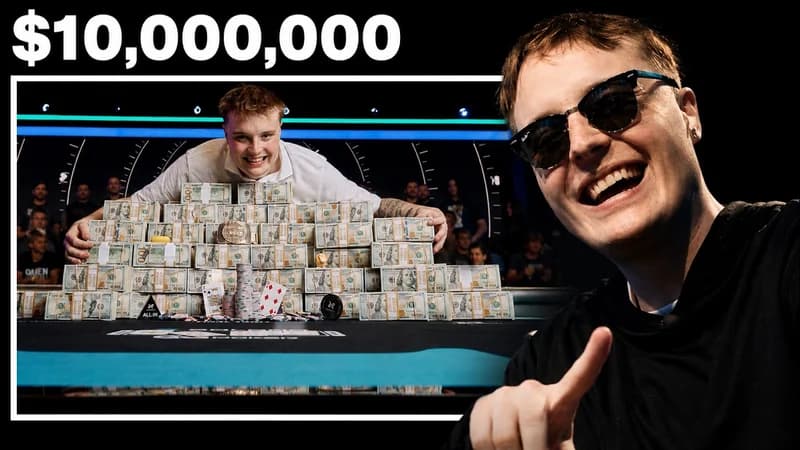
WSOP Main Event Champion Lucas Jumalon: Mindset, Hero Calls, and a $10 Million Prize
Lucas Jumalon discusses his 2026 WSOP Main Event win, including key hands, mental preparation with Patrick Leonard, and the psychological battle at the final table.
Multiway Hand Review: Donk Bet on a Wet Board Calls for Careful Play
A $600 regional mini-high roller hand featuring a multiway donk bet on a wet K♥5♥6♣ flop. Hero in the big blind with 5♠5♦ faces decisions against a solid HJ and a fishy SB, leading to a tricky turn and river jam.
How to Deal with Pot-Stealing Regulars on Ignition?
In a $0.25/$0.5 cash game on Ignition, a player encountered tough regulars who often call down to the river and try to steal large pots. This article analyzes the characteristics of these players and provides targeted exploitative strategies, including adjusting river bluff frequencies, using blocking bets, and optimizing check-raise lines.
Hand Analysis at 1/3: Rivered by Quads – Cooler or Misplay?
A Reddit user shares a 1/3 live hand: holding 77 on a board of 8-8-5-7-K, rivered a full house. Opponent shoves and shows quads. The author reflects on whether to raise the turn and whether the river shove was correct. This article analyzes opponent leaks and decision logic.

Facing an OMC's Cold 3-Bet and Calling Leads to a Multiway Pot, How to Respond?
A player encounters a rare situation in a $5/$5 cash game: an old man coffee OMC who has never 3-bet before makes a cold 3-bet preflop, and calling almost certainly results in a multiway pot. The article analyzes OMC's range characteristics and discusses reasonable settings for 4-bet, call, and fold ranges, taking into account postflop position and pot control.

Why Not Call Weak Hands vs 3-Bet Preflop?
In Texas Hold'em, calling weak hands against a 3-bet preflop is often a source of long-term losses. This article analyzes common calling mistakes, the underlying math, and better strategies like folding or 4-betting to help players avoid common pitfalls.

Paired Board Complete Strategy Guide
In-depth analysis of the definition, principles, and strategy adjustments for preflop, flop, turn, and river on paired boards, covering real-world examples and common misconceptions to help you make optimal decisions when the board pairs.

Postflop Optimal Pot Control: When to Choose Small Pot Play
Through practical hand examples, it analyzes the play choices for marginal made hands, drawing hands, and out-of-position situations, and points out common misconceptions, helping players maintain profitability while avoiding the risk of large pots.

3-Bet Line: Balancing Call and Re-raise Strategy
This article delves into the decision balance of the 3-bet line in Texas Hold'em, analyzing when to call and when to re-raise, and explains how to construct a balanced range that combines both value and bluffs, helping players avoid common mistakes and improve the long-term profitability of their preflop strategy.

Texas Hold'em Raising Size Theory: Strategic Implications of Big vs Small Bets
This article explains the core principles of raising size, analyzes the strategic intentions of big vs small bets in different situations, uses practical examples to show how to adjust sizing based on board texture, range, and opponent, and points out common mistakes to help players optimize their decisions.

Final Table Deep Stack Strategy
In the final table stage of a poker tournament, when stack depth exceeds 40BB, players need to shift from the conventional ICM tight-aggressive style to focusing more on value betting and range balancing. This article details preflop opening ranges under deep stacks, post-flop play, strategies against short stacks, and common misconceptions, helping you maximize profits with deep stacks at the final table.