flush draw
Editor: dezhoupuke.orgRelated Glossary
Rainbow Flop
Rainbow Flop
Rainbow Flop refers to a flop where the three community cards are all of different suits, with no two cards being the s…
Monotone Flop
Monotone Flop
Term: Monotone Flop A monotone flop refers to a flop where all three community cards are of the same suit, such as all …
Flush Draw
Flush Draw
In practice, a flush draw is an aggressive and valuable type of draw because it has approximately a 35% chance to compl…
Front-Door Flush Draw
Front-Door Flush Draw
In practice, this means the player has 9 outs to complete the flush from the flop onward. It is one of the strongest dr…
Backdoor Flush Draw
Backdoor Flush Draw
In practice, the value of a backdoor flush draw lies in its ability to increase the hand's potential equity. It can ser…
Nut Flush Draw
Nut Flush Draw
Nut Flush Draw A nut flush draw refers to a flush draw that, if completed, becomes the nut flush the highest possible f…
Non-Nut Flush Draw
Non-Nut Flush Draw
Term: Non-Nut Flush Draw A non-nut flush draw refers to a situation where a player is drawing to a flush that is not th…
Double Suited
Double Suited
In practice, this term is used to describe having a double flush draw on the flop or turn, meaning the player is chasin…
Rainbow Turn
Rainbow Turn
A turn card that is of a different suit from all three flop cards, preventing any flush draw from being possible on the…
Monotone Turn
Monotone Turn
The core meaning of this term is that the board is heavily concentrated in one suit, greatly increasing the likelihood …
Rainbow Board
Rainbow Board
A flop where all three cards are of different suits, making a flush draw impossible on the flop.
Omaha Single Suited
Omaha Single Suited
In Omaha, a starting hand where exactly two of the four hole cards share the same suit, leaving the other two cards of …
Related Strategy
K4s Complete Strategy Guide: Preflop Ranges and Postflop Play Explained
K4s suited K4 is a marginal hand that is often overvalued. This article provides a complete executable strategy from preflop opening, calling, and raising ranges in various positions to postflop play on different board textures, helping you avoid costly mistakes with K4s.
Monotone vs Paired Flop Strategy
Monotone three of the same suit and paired with a pair on board flops are two extreme structures that directly affect range construction, bet sizing, and bluffing frequency. This article provides an in-depth analysis of the characteristics, range advantage shifts, and counter-strategies for these two types of flops, helping you quickly adjust your play in real-time.
Monotone and Paired Flops: How to Adjust Flop Strategy
Monotone flops three cards of the same suit and paired flops flop has a pair are two highly distinctive board textures. This article deeply analyzes the impact of these two board types on ranges and provides practical advice on flop betting frequencies, hand selection, and counter-strategies.
Monotone and Paired Boards: Key Strategy Adjustments in Flop Structure
Flop structure determines strategic core. This article details preflop range preferences, postflop bet sizing, bluffing frequency, and defensive techniques for monotone three of a suit and paired pair on board flops, helping you avoid common mistakes and improve your real-world win rate.
Monotone and Paired Boards: How to Adjust Your Flop Strategy
Monotone three of the same suit and paired flop has a pair boards are two special flop structures that greatly alter player ranges and action logic. This article explains the characteristics of these board types, range construction, and flop strategy adjustments to help you make better decisions in practice.
Short Deck 6+ Flush vs Full House: Strategy and Probability Deep Dive
This article provides an in-depth analysis of the probability changes and hand strength comparison between flush and full house in Short Deck 6+, offering practical decision guides for flop, turn, and river to help players make optimal choices when drawing or made hands.
Short Deck 6+ Flush Draw Practical Guide: Probability, Odds, and Aggressive Play
Short deck 6+ poker removes 2-5, making flush draws more probable but also increasing the strength of made hands. This article details flush draw play on the flop and turn, including pot odds calculation, position influence, reverse implied odds, and how to incorporate balancing strategy.
Monochrome and Paired Flops: How Flop Structure Affects Your Strategy
Flop structure is the core basis for post-flop decisions. Monochrome flops three cards of the same suit and paired flops a pair on the flop completely change the dynamics of ranges, value, and bluffs. This article deeply analyzes the characteristics of these two special flops, teaching you how to adjust bet sizing, continuation betting strategies, and hand selection to leverage structural advantages for profit in actual play.
Monotone and Paired Flops: In-Depth Analysis of Flop Structure
Flop structure is the core of Texas Hold'em decision-making. This article systematically explains the unique properties of monotone three of a suit and paired containing a pair flops, analyzing players' continuation betting, defense, and bluffing strategies on these boards, helping you build a more precise flop attack and defense system.
Monotone and Paired Boards: Offensive and Defensive Strategies for Flop Structures
This article deeply analyzes the characteristics of monotone flush and paired board flop structures, guiding players to adjust ranges and bet frequencies based on different flop types, covering range construction, defense strategies, and common pitfalls to help improve post-flop decision quality.
Monotone and Paired Flops: Key Strategies for Flop Structure
This article delves into the strategic differences between monotone and paired flops in the flop round. Monotone flops emphasize flush draws and range protection, while paired flops focus on full house possibilities and opponent range polarization. Through hand examples and exploitative adjustments, it helps optimize post-flop decisions.
Poker Strategy on Monochrome and Paired Boards: How to Profit in Special Flop Structures
Monochrome flush draw and paired boards are two special flop structures that greatly affect player ranges and actions. This article details their characteristics, range construction, bet sizing, and post-flop strategies to help you avoid common mistakes and improve decision quality.
Related Players
' width='512' height='512'/%3E%3Ctext x='256' y='256' text-anchor='middle' dominant-baseline='central' font-family='system-ui,sans-serif' font-size='240' font-weight='bold' fill='hsl(70,30%25,85%25)'%3EGG%3C/text%3E%3C/svg%3E)
Gregor Greko
 Germany
Gregor Greko is a German poker player known for his deep runs in European high-stakes tournaments, including the 2018 online poker MILLIONS Germany and the 2019 The Big Wrap. While he has not won major titles, he has demonstrated aggressive play and resilience at the tables.
' width='512' height='512'/%3E%3Ctext x='256' y='256' text-anchor='middle' dominant-baseline='central' font-family='system-ui,sans-serif' font-size='240' font-weight='bold' fill='hsl(336,30%25,85%25)'%3ERF%3C/text%3E%3C/svg%3E)
Roar Flotre
 Norway
Roar Flotre is a Norwegian poker player known for his deep runs in the Malta Poker Festival Grand Event, where he demonstrated a knack for hitting crucial river cards. He has consistently reached the final stages of major tournaments, showcasing a resilient and aggressive style.
' width='512' height='512'/%3E%3Ctext x='256' y='256' text-anchor='middle' dominant-baseline='central' font-family='system-ui,sans-serif' font-size='240' font-weight='bold' fill='hsl(217,30%25,85%25)'%3EII%3C/text%3E%3C/svg%3E)
Ibraim Ibraimovic
 United States
Ibraim Ibraimovic is an American poker player from Brooklyn, New York, with career earnings around $145,999. He has frequently cashed in Borgata series events, known for his deep runs and aggressive play. Ibraimovic humorously claims to be related to soccer star Zlatan Ibrahimović.
' width='512' height='512'/%3E%3Ctext x='256' y='256' text-anchor='middle' dominant-baseline='central' font-family='system-ui,sans-serif' font-size='240' font-weight='bold' fill='hsl(105,30%25,85%25)'%3EJC%3C/text%3E%3C/svg%3E)
Jay Casey
United States
Jay Casey is an American poker player best known for finishing second in Foxwoods Poker Event #1 for $62,497. He has limited public tournament records, with no major titles or high-profile cashes documented in major databases.
' width='512' height='512'/%3E%3Ctext x='256' y='256' text-anchor='middle' dominant-baseline='central' font-family='system-ui,sans-serif' font-size='240' font-weight='bold' fill='hsl(275,30%25,85%25)'%3EJT%3C/text%3E%3C/svg%3E)
Jeffrey Tahler
United States
Jeffrey Tahler is an American poker player who has cashed in multiple World Series of Poker events since 2006. His biggest score came in 2019 when he finished 9th in the $800 No-Limit Hold'em Deepstack for $31,933.
' width='512' height='512'/%3E%3Ctext x='256' y='256' text-anchor='middle' dominant-baseline='central' font-family='system-ui,sans-serif' font-size='240' font-weight='bold' fill='hsl(346,30%25,85%25)'%3EAD%3C/text%3E%3C/svg%3E)
Adam Darkazalli
United States
Adam Darkazalli is an American poker player known for deep runs in regional tournaments, including a 5th-place finish in a WSOP Circuit Omaha Hi-Lo event and multiple final-table appearances at Foxwoods. His recorded live earnings exceed $33,000 across a modest number of cashes.
' width='512' height='512'/%3E%3Ctext x='256' y='256' text-anchor='middle' dominant-baseline='central' font-family='system-ui,sans-serif' font-size='240' font-weight='bold' fill='hsl(185,30%25,85%25)'%3EJM%3C/text%3E%3C/svg%3E)
Joseph Mobley
United States
Joseph Mobley is an American professional poker player known for his focus on Pot-Limit Omaha tournaments. He has cashed multiple times at the World Series of Poker, with a best finish of 13th in the 2019 $1,500 PLO Bounty event. His live tournament earnings exceed $20,000.
' width='512' height='512'/%3E%3Ctext x='256' y='256' text-anchor='middle' dominant-baseline='central' font-family='system-ui,sans-serif' font-size='240' font-weight='bold' fill='hsl(207,30%25,85%25)'%3EDH%3C/text%3E%3C/svg%3E)
Dongze Hao
 China
China
Dongze Hao is a Chinese professional poker player best known for his deep run in the 2022 UKIPT London Main Event, where he finished 10th for £8,520. His aggressive play in a crucial hand exemplifies his willingness to take risks under pressure.
Related News

Which poker habit took you too long to unlearn? Reddit players discuss
On Reddit r/onlinepoker, players share their hardest poker habits to break. This article summarizes the most common ones, including overplaying flush draws, overvaluing small pairs, and being too passive post-flop, along with practical advice to fix these habits.
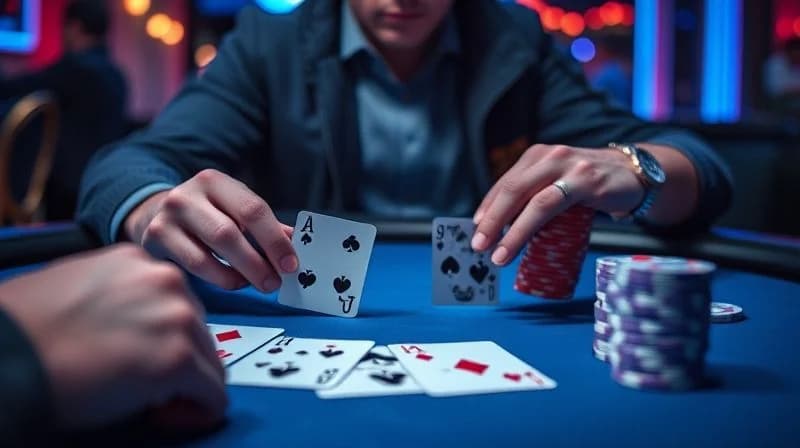
Bottom Set vs Top Set: Was This All-In Correct or Wrong?
In a 5/10 cent approx $5 buy-in cash game, a player with bottom set faces an opponent's all-in and eventually finds out the opponent has top set. This article reviews the hand, analyzing from a GTO perspective whether the decision was correct, as well as the impact of live reads.
2026 WSOP: Kristen Foxen Wins $25K High Roller Championship
In WSOP Event 19 $25,000 High Roller, Canadian pro Kristen Foxen defeated Galen Hall heads-up to win her sixth WSOP bracelet and $1,773,083, a career-best score. She joins 26 others as the only players with at least six WSOP bracelets.

Rainbow Board Strategy: The Essence of Playing Without a Flush Draw
This article systematically explains the definition and principles of rainbow boards, as well as betting, calling, and bluffing strategies when there is no flush draw, combined with practical examples and common mistakes, to help players make optimal decisions on the flop.

Complete Analysis of Monotone Board Defense and Attack Strategies
This article provides in-depth explanations of its definition, probability principles, attack and defense strategies, common mistakes, and practical examples, helping players make correct decisions on the flop, turn, and river.

Call and Bet Frequency on Two-tone Boards
Two-tone board is a flop with two cards of the same suit, which significantly impacts player strategy. This article explains its definition, principles, practical strategies, and common misconceptions to help players optimize their call and bet frequencies.

Value Difference Between Suited and Unsuited Starting Hands
This article delves into the value difference between suited and unsuited starting hands in Texas Hold'em, covering definitions, principles, practical examples, and common misconceptions to help players understand the advantages of suited hands and how to use them correctly.

Dry vs Wet Board: Differences and Practical Application
This article explains in detail the definition, principles, practical examples, and common misconceptions of dry and wet board in Texas Hold'em, helping you make better decisions based on board texture.

Texas Hold'em Combinatorics: Accurately Calculating Opponent Hand Ranges
Combinatorics is a core tool for quantifying the likelihood of an opponent's hand in Texas Hold'em. Starting from the definition, this article explains combinatorics principles, practical calculation examples, and common misconceptions to help you read hands and make decisions more accurately.

Outs Calculation in Poker: How to Quickly Estimate the Number of Outs
This article systematically explains the definition of Outs in poker, the calculation method 4-2 rule, practical applications, and common misconceptions, helping players quickly evaluate drawing probabilities and make better decisions.

Post-flop Outs and Pot Odds: Rule of 4 and 2
The Rule of 4 and 2 is a technique for quickly estimating the win rate of a drawing hand post-flop: on the flop, multiply the number of outs by 4 to get an approximate win rate to the river; on the turn, multiply by 2 to get the river win rate. This article explains its principles, practical applications, and common misconceptions.

Pocket Jacks raised to 6bb preflop, called by multiple players, then went all-in on the flop and lost to 93s—was this hand played wrong?
A player shared a live poker hand with J on Reddit: preflop raise to 6bb, three callers; flop 9d8d3s bet 20bb, two callers; turn 5s all-in for 70bb, two callers; river T♠, lost to 93s. The player questioned their play and asked about 3-bet sizing. This article analyzes the decision-making logic in this hand and provides common mistake warnings.
Related
Draw
Draw A draw refers to a situation where a player's current hand has not yet made a made hand but has the potential to i…
GlossaryFlush Draw
In practice, a flush draw is an aggressive and valuable type of draw because it has approximately a 35% chance to compl…
ToolsOuts Calculator
Number of Outs → Flop/Turn Win Rate Rule of 2 and 4