99
Editor: dezhoupuke.orgRelated Glossary
MP
MP
MP Middle Position is the seat area in Texas Hold'em that comes after UTG and before the Cutoff CO, typically including…
Pocket Pair
Pocket Pair
Its primary use is as a high-value starting hand, as it already forms a pair preflop with potential to improve to three…
Merged Range
Merged Range
A merged range contains strong made hands and medium-strength hands, betting for value and protection. It is the opposi…
Value Bet
Value Bet
A value bet is a bet that gets called by worse hands often enough to print. It is not any bet with a pair.
Light 4-Bet
Light 4-Bet
A light 4-bet is a 4-bet made with a hand weaker than typical value hands, often as a bluff to force folds or balance a…
Medium Stack Jam
Medium Stack Jam
A preflop all-in shove from a player with a medium stack size typically 20-35 big blinds, used to apply pressure and av…
Nut Advantage Flop
Nut Advantage Flop
A flop texture where one player's range contains significantly more nut or near-nut combinations than the opponent's ra…
Hand Class
Hand Class
A system of categorizing poker hands into groups based on strength, type, or qualifying criteria, often used in lowball…
Limit Hold'em Starting Hands
Limit Hold'em Starting Hands
Starting hands in Limit Hold'em refer to the two hole cards dealt to each player, which are evaluated based on their st…
No Limit Hold'em Starting Hands
No Limit Hold'em Starting Hands
Starting hands in No Limit Hold'em are the two hole cards dealt to each player before any community cards are revealed,…
Related Strategy
How to Effectively Execute Flat Call Strategy OOP vs 3bet
In Texas Hold'em, when out of position OOP facing a 3bet, many players tend to either fold or 4bet. But choosing to Flat Call at the right time can balance ranges, control the pot, and leverage postflop skills. This article explains in detail the applicable scenarios, range construction, postflop strategies, and common mistakes of OOP Flat Call versus 3bet, helping you improve profitability in deep stack confrontations.
3-Bet Defense on LAG Tables: Strategy and Adjustments
This article explains how to effectively defend against 3-bets on tables dominated by loose-aggressive LAG players. It covers typical LAG 3-bet ranges, decision-making for 4-bets vs. calls, the impact of position and stack depth, and key points for adjusting exploitative strategies, helping you make correct responses in highly aggressive environments.
10bb Short Stack UTG vs UTG+1 Preflop Range Strategy
This article deeply analyzes how UTG+1 constructs a reasonable preflop range when facing an UTG open raise at 10bb short stack depth. It covers the mathematical logic behind calling, shoving, and folding decisions, and provides practical adjustment suggestions combined with ICM factors.
DriveHUD Review: Multi-Table HUD Selection Guide
In-depth review of DriveHUD, a poker HUD tool designed for multi-table players. From overall rating, core features, pros and cons to target audience and value for money, provides objective analysis and purchase recommendations.
DriveHUD Review: HUD Guide for Multi-Tabling Players
DriveHUD is a poker HUD software designed for multi-tabling players, with an intuitive interface and detailed data. This article provides a comprehensive review from aspects such as overall rating, core features, pros and cons, target audience, and price value, helping you determine whether it is suitable for long-term use.
Short Deck 6+ Preflop Range Adjustment: Transitioning Preflop Strategy from Regular Texas Hold'em to Short Deck
Short Deck 6+ Short Deck has a dramatically different hand strength structure due to the removal of 2-5. This article, starting from positional scenarios, provides recommended preflop ranges raising ranges, calling ranges, explains the construction logic in detail, analyzes adjustment factors (effective stacks, opponent tendencies, table dynamics), references GTO, and offers practical application suggestions to help you quickly adapt to Short Deck preflop play.
UTG Range Construction in Straddle Game: Tight or Aggressive?
In a straddle game, the UTG position should construct a tighter range due to pot inflation and positional disadvantage. This article analyzes recommended hand types, construction logic, adjustment factors, and GTO references, and provides practical application strategies. Helping you make optimal decisions in deep stack or short stack scenarios.
Best Poker HUD Software Recommendations: Enhance Your Online Game Data Insights
This article selects several mainstream poker HUD software, including Hold'em Manager 3, PokerTracker 4, DriveHUD 2, etc., analyzes their core highlights, and helps players choose the most suitable tool based on budget and needs.
Flop Betting Frequency Table: UTG vs BB Heads-Up Pot Strategy
This article uses the UTG vs BB heads-up pot as an example to construct a flop betting range and frequency table. It explains range construction logic, adjustment factors, and GTO references to help players make optimal decisions on common flops like J-T-2 rainbow.
Practical Application of Range and Nut Advantage on the Flop
This article explains the difference and application of range advantage and nut advantage on the flop. Using BTN vs BB as an example, it demonstrates how to formulate offensive or defensive strategies based on board texture, including GTO references and adjustment factors, helping players maximize exploitation opportunities in position.
Post-flop Range Advantage and Nut Advantage: Range Analysis with CO vs BTN Example
This article uses the example of CO opening and BTN calling on a flop of K♠9♥6♦ to explain how to leverage range advantage and nut advantage to construct a betting range. It covers position scenarios, recommended hand types, construction logic, adjustment factors, GTO references, and practical applications to help players maximize exploitation of opponents in advantageous situations.
Flop Range Betting Frequency Table: CO vs BB on T-7-2 Rainbow Board
This article uses the example of a heads-up pot between CO and BB on a T-7-2 rainbow flop to detail the construction of a flop continuation betting c-bet frequency table. It covers GTO reference frequencies, hand range division value/bluff, adjustment factors, and practical applications to help players optimize their betting decisions in various exploitative scenarios.
Related Players
' width='512' height='512'/%3E%3Ctext x='256' y='256' text-anchor='middle' dominant-baseline='central' font-family='system-ui,sans-serif' font-size='240' font-weight='bold' fill='hsl(145,30%25,85%25)'%3EAC%3C/text%3E%3C/svg%3E)
Anthony Chaptini
 Australia
' width='512' height='512'/%3E%3Ctext x='256' y='256' text-anchor='middle' dominant-baseline='central' font-family='system-ui,sans-serif' font-size='240' font-weight='bold' fill='hsl(303,30%25,85%25)'%3EJG%3C/text%3E%3C/svg%3E)
Jean Giorgi
 France
Jean Giorgi, French poker player, world ranking 31672, career total earnings $99,697. Although not a top-known player, he has achieved multiple results in tournaments.
' width='512' height='512'/%3E%3Ctext x='256' y='256' text-anchor='middle' dominant-baseline='central' font-family='system-ui,sans-serif' font-size='240' font-weight='bold' fill='hsl(224,30%25,85%25)'%3ENP%3C/text%3E%3C/svg%3E)
Nils Pudel
 Germany
Nils Pudel is a German professional poker player with career live tournament earnings exceeding $1.2 million. He is best known for his deep runs and victories at major European events, including the Irish Poker Open and the Luxon Mystery Bounty, where he showcased dramatic final-table comebacks.
' width='512' height='512'/%3E%3Ctext x='256' y='256' text-anchor='middle' dominant-baseline='central' font-family='system-ui,sans-serif' font-size='240' font-weight='bold' fill='hsl(218,30%25,85%25)'%3EJH%3C/text%3E%3C/svg%3E)
Jeroen Hop
 Netherlands
Jeroen Hop, Dutch poker player, world ranking approximately 31255th, career total earnings approximately $99,202. Known for his solid play in low-level tournaments, specific career details are limited in public sources.
' width='512' height='512'/%3E%3Ctext x='256' y='256' text-anchor='middle' dominant-baseline='central' font-family='system-ui,sans-serif' font-size='240' font-weight='bold' fill='hsl(178,30%25,85%25)'%3EMS%3C/text%3E%3C/svg%3E)
Ming Sheng Liu
 Taiwan
Ming Sheng Liu, Taiwanese poker player, world ranking 31290, total earnings $99,100. He has achieved results in multiple Asian events and is known for his solid playing style.
' width='512' height='512'/%3E%3Ctext x='256' y='256' text-anchor='middle' dominant-baseline='central' font-family='system-ui,sans-serif' font-size='240' font-weight='bold' fill='hsl(319,30%25,85%25)'%3EJG%3C/text%3E%3C/svg%3E)
Jesse Greer
 United States
Jesse Greer, American poker player, world ranking 31143, career total earnings $99,642. Known for his solid style and performance at the tables.
' width='512' height='512'/%3E%3Ctext x='256' y='256' text-anchor='middle' dominant-baseline='central' font-family='system-ui,sans-serif' font-size='240' font-weight='bold' fill='hsl(179,30%25,85%25)'%3ETG%3C/text%3E%3C/svg%3E)
Thomas Gawlik
United States
Thomas Gawlik is an American poker player, world rank 31145, career total earnings $99,637. He has achieved results in multiple events with a solid style, but public information is limited.
' width='512' height='512'/%3E%3Ctext x='256' y='256' text-anchor='middle' dominant-baseline='central' font-family='system-ui,sans-serif' font-size='240' font-weight='bold' fill='hsl(209,30%25,85%25)'%3ERN%3C/text%3E%3C/svg%3E)
Robert Newton
United States
Robert Newton, American poker player, world ranking 31238, career total earnings $99,284. Known for his steady performance and strategic thinking at the poker table.
Related News
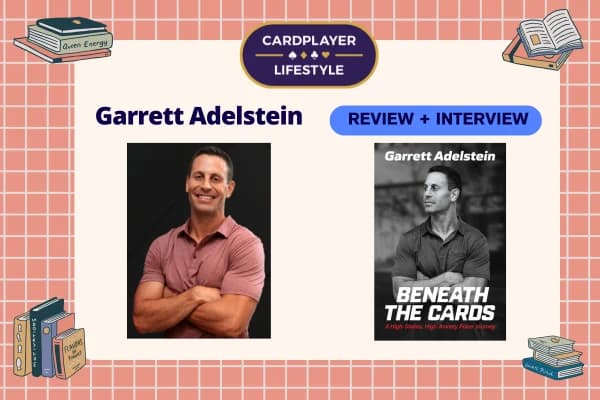
Garrett Adelstein Opens Up in New Memoir 'Beneath The Cards'
Garrett Adelstein discusses his new memoir 'Beneath The Cards,' covering his poker career, the J-4 controversy, mental health, and advice for players. Includes book review and details.

Darren Rabinowitz Wins $5,000 8-Handed NLH at 2026 WSOP, Denies Hellmuth 18th Bracelet
Darren Rabinowitz outlasted Phil Hellmuth heads-up to win Event #99: $5,000 8-Handed No-Limit Hold'em at the 2026 WSOP, earning his second bracelet and $695,256. Hellmuth, chasing a record 18th bracelet, settled for second place and $464,286.

Flopped a Set Then Reversed: How to Avoid Burning Chips with 99 on a Flush Draw Board?
A player flopped a set with 99 in a $0.25/$0.50 game, but facing a possible flush draw, he chose an aggressive bet, eventually losing to opponent's flush on the river. This article reviews the decisions on each street and analyzes adjustment suggestions: flop 3bet sizing, turn choice, value of river fold.
Bottom Set vs Top Set: Was This All-In Correct or Wrong?
In a 5/10 cent approx $5 buy-in cash game, a player with bottom set faces an opponent's all-in and eventually finds out the opponent has top set. This article reviews the hand, analyzing from a GTO perspective whether the decision was correct, as well as the impact of live reads.

Facing an OMC's Cold 3-Bet and Calling Leads to a Multiway Pot, How to Respond?
A player encounters a rare situation in a $5/$5 cash game: an old man coffee OMC who has never 3-bet before makes a cold 3-bet preflop, and calling almost certainly results in a multiway pot. The article analyzes OMC's range characteristics and discusses reasonable settings for 4-bet, call, and fold ranges, taking into account postflop position and pot control.

Paired Board Complete Strategy Guide
In-depth analysis of the definition, principles, and strategy adjustments for preflop, flop, turn, and river on paired boards, covering real-world examples and common misconceptions to help you make optimal decisions when the board pairs.

Texas Hold'em Combinatorics: Accurately Calculating Opponent Hand Ranges
Combinatorics is a core tool for quantifying the likelihood of an opponent's hand in Texas Hold'em. Starting from the definition, this article explains combinatorics principles, practical calculation examples, and common misconceptions to help you read hands and make decisions more accurately.

UTG Opening Range Construction: Correct Choices for the Tightest Position
UTG Under the Gun is the most disadvantageous position preflop. Constructing a reasonable opening range is key to avoiding big mistakes. This article starts with definitions and principles, provides typical range examples, analyzes common misconceptions, and helps you master the correct strategy for the tight position.

Early Stage Hyper Turbo Tournament Strategy
The early stages of Hyper Turbo tournaments require aggressive strategies due to extremely high blinds and shallow stack depths. This article explains definitions, principles, practical examples, and common misconceptions to help you quickly accumulate chips.

Hyper Turbo Late Stage Strategy Guide: From Theory to Practice
In-depth analysis of unique strategies for late stages of hyper-turbo tournaments, including ICM pressure, preflop all-in range adjustments, blind stealing and re-stealing techniques, and common pitfalls, helping you profit steadily in high volatility.

Turbo Final Table
Final table strategy in turbo tournaments is completely different from regular tournaments: short blinds, fast pace, high ICM pressure, requiring aggressive blind stealing and range adjustments. This article provides a comprehensive analysis from definitions and principles to practical examples and common misconceptions, explaining how to gain an advantage at turbo final tables.

Corey Harrison Wins WSOP Circuit New Orleans Main Event, Earns Second Gold Ring
At the Caesars New Orleans WSOP Circuit Main Event, Corey Harrison emerged from a field of 420 players to win the $122,221 champion's prize, another significant victory following his 2013 WSOP gold bracelet, and his second WSOP Circuit gold ring. The total prize pool reached $636,300.
Related
DriveHUD Review: HUD Guide for Multi-Tabling Players
DriveHUD is a poker HUD software designed for multi-tabling players, with an intuitive interface and detailed data. Thi…
StrategyDriveHUD Review: Multi-Table HUD Selection Guide
In-depth review of DriveHUD, a poker HUD tool designed for multi-table players. From overall rating, core features, pro…
StrategyBest Poker HUD Software Recommendations: Enhance Your Online Game Data Insights
This article selects several mainstream poker HUD software, including Hold'em Manager 3, PokerTracker 4, DriveHUD 2, et…
Strategy10bb Short Stack UTG vs UTG+1 Preflop Range Strategy
This article deeply analyzes how UTG+1 constructs a reasonable preflop range when facing an UTG open raise at 10bb shor…
StrategyPost-flop Range Advantage and Nut Advantage: Range Analysis with CO vs BTN Example
This article uses the example of CO opening and BTN calling on a flop of K♠9♥6♦ to explain how to leverage range advant…
StrategyShort Deck 6+ Preflop Range Adjustment: Transitioning Preflop Strategy from Regular Texas Hold'em to Short Deck
Short Deck 6+ Short Deck has a dramatically different hand strength structure due to the removal of 2-5. This article, …
NewsTexas Hold'em Combinatorics: Accurately Calculating Opponent Hand Ranges
Combinatorics is a core tool for quantifying the likelihood of an opponent's hand in Texas Hold'em. Starting from the d…
NewsFacing an OMC's Cold 3-Bet and Calling Leads to a Multiway Pot, How to Respond?
A player encounters a rare situation in a $5/$5 cash game: an old man coffee OMC who has never 3-bet before makes a col…