4-Bet
Editor: dezhoupuke.orgRelated Glossary
4-Bet
4-Bet
A 4-bet is the re-raise after a 3-bet. At 100bb a common size is about 2.2x to 2.5x that 3-bet, for example 9bb to 22–2…
5-Bet
5-Bet
A 5-bet is the fifth raise in a betting round, usually an all-in shove. It is not a bluff; it is a value raise with a p…
Cold 4-Bet
Cold 4-Bet
A cold 4-bet is a preflop re-raise by a player who has not yet put money in the pot, against an open and a 3-bet. It ca…
Light 4-Bet
Light 4-Bet
A light 4-bet is a 4-bet made with a hand weaker than typical value hands, often as a bluff to force folds or balance a…
Cold 5-Bet
Cold 5-Bet
Term: 冷5-Bet Cold 5-Bet A Cold 5-Bet refers to a pre-flop situation where a player, without having participated in any …
4-Bet Bluff
4-Bet Bluff
A 4-bet bluff is a raise over a 3-bet with a hand that folds to further aggression. It's not a value raise, but a semi-…
3-Bet Folding
3-Bet Folding
3-bet folding means raising preflop and folding to a 4-bet. It's a common leak in live cash games, not a balanced strat…
4-Bet Folding
4-Bet Folding
The core meaning of this term is that after actively raising, the player decides to give up the pot due to assessing th…
Fold to 4-Bet
Fold to 4-Bet
Fold to 4-Bet is a poker statistic that measures the percentage of times a player folds when facing a 4-bet after they …
Four Bet Pot
Four Bet Pot
A pot created preflop after a sequence of a raise, a re-raise 3-bet, and a second re-raise 4-bet.
Five Bet Pot
Five Bet Pot
A pot that has been raised five times preflop initial raise, 3-bet, 4-bet, 5-bet, typically involving very strong hands…
Flop 4-Bet
Flop 4-Bet
A flop 4-bet is the fourth betting action on the flop, typically a re-re-raise after a bet, a raise, and a re-raise.
Related Strategy
Hijack Blind Stealing and Defense Strategy Guide
This article systematically explains the blind stealing techniques of the hijack HJ position in Texas Hold'em, as well as how to counter-steal and defend against HJ's blind steals. Covers opening ranges, bet sizing, adjustments when facing counter-steals, and practical frequency and balance points to help you gain an advantage in middle position battles.
UTG Opening Range and Exploitation Adjustments: From Standard Model to Targeted Strategies
UTG under the gun is the most difficult position to play preflop. The standard opening range needs to balance value and defense. This article first provides a general UTG raising range about 15%-20% of hands, then focuses on how to make exploitation adjustments against tight-passive, loose-aggressive, and passive opponents, including expanding/reducing range, adjusting raise size, increasing/decreasing limp, and other practical techniques.
QQ vs 3-Bet Win Rate?
QQ vs 3-Bet: Win rate, common mistakes, applicable scenarios, and FAQ — Pocket Queens QQ are a strong hand in Texas Hold'em, but many players make mistakes when facing a 3-bet. This article analyzes the optimal strategy from both preflop and postflop perspectives, considering different positions, stack depths, and opponent tendencies, to help you play QQ profitably in favorable situations.
How to Build a 3-Bet Range: A Strategy Guide from Beginner to Expert
How to Build a 3-Bet Range: Win Rates, Common Mistakes, Applicable Scenarios, and FAQ — 3-Bet is an important offensive tool in No-Limit Texas Hold'em. This article systematically explains how to construct a reasonable 3-bet range from perspectives such as position, opponent type, and pot odds, including balancing value hands and bluffs, strategies for dealing with 4-bets, and adjustment methods in actual play. Suitable for intermediate to advanced players.
Hijack Steal and Resteal: How to Build an Advantage Preflop
The hijack HJ is the prime position for stealing blinds in Texas Hold'em, but it also faces the threat of resteals. This article details the HJ's opening range, steal and resteal strategies, including adjustments for different opponents, 3-bet defense from the blinds, and postflop play, helping you build a chip advantage in middle-late position.
Complete Guide to Stealing Blinds from the Button: From Beginner to Pro
Stealing blinds from the button is an important profit-making strategy in Texas Hold'em. This article explains the mathematical principles, starting hand selection, bet sizing, opponent exploitation, and defense against re-steals to improve your button attack efficiency.
The Golden Timing for Cold 4-Bet Bluffs: A Guide to Strategy and Hand Selection
Cold 4-bet bluffing is an advanced preflop strategy where timing is crucial. This article explains key factors such as position, opponent ranges, stack depth, and table image, and provides specific hand examples and precautions to help you execute this high-risk, high-reward play precisely.
Deep Stack Cash Game Preflop Strategy: A Comprehensive Guide from Starting Hands to Raise Sizing
Preflop strategy in deep stack cash games 200BB+ is fundamentally different from standard stacks. This article details starting hand selection, raise sizing, and techniques for facing 3-bets and 4-bets in deep stack situations, helping you construct a profitable preflop range in deep stack games.
Short Stack Showdown: UTG vs UTG+1, 4-bet Strategy in a 10bb Single Raised Pot
At 10bb short stack depth, when UTG faces a single raise from UTG+1, 4-bet shoving is a common strategy. This article explains range construction, balancing key points, and adjustments against different opponent types to help you maximize EV.
Hijack Steal and Re-steal: Positional Advantage and Practical Strategy
The hijack HJ is a strategically valuable position in Texas Hold'em. This article details how to effectively steal blinds from the HJ, as well as adjustment strategies when facing re-steals, including range construction, bet sizing, and responses to different opponents, helping players maximize positional advantage in the game.
How to Play in the Small Blind?
This article provides an in-depth analysis of preflop strategy when holding QQ in the Small Blind SB. Based on positional disadvantage and stack depth, it offers recommended ranges including raise, 3-bet, cold call scenarios, construction logic, adjustment factors opponent tendencies, ante, ICM, GTO references, and practical application examples to help you make optimal decisions in different situations.
How to Play from the BTN Position?
How to Play from the BTN Position?: Win rate, common mistakes, applicable scenarios and FAQ — This article deeply analyzes the preflop strategy of holding QQ on the button, including standard raises, 3-bets against different positions, 4-bet range construction, and adjustments based on opponent type and stack depth. Provides GTO reference and practical application advice to help you maximize the value of QQ on the button.
Related Players
' width='512' height='512'/%3E%3Ctext x='256' y='256' text-anchor='middle' dominant-baseline='central' font-family='system-ui,sans-serif' font-size='240' font-weight='bold' fill='hsl(221,30%25,85%25)'%3EFH%3C/text%3E%3C/svg%3E)
Fedor Holz
 Germany
Fedor Holz is a German professional poker player and two-time WSOP bracelet winner, known for his online alias 'CrownUpGuy' and historic 2016 heater. He ranks among the all-time live tournament money leaders and is a successful entrepreneur, co-founding Pokercode and Primed Mind.
' width='512' height='512'/%3E%3Ctext x='256' y='256' text-anchor='middle' dominant-baseline='central' font-family='system-ui,sans-serif' font-size='240' font-weight='bold' fill='hsl(196,30%25,85%25)'%3EPH%3C/text%3E%3C/svg%3E)
Pedro Henrique De Lira
 Brazil
Pedro Henrique De Lira is a professional poker player from Brazil, known for his performance in online and live tournaments, with high visibility in the Brazilian poker community.
' width='512' height='512'/%3E%3Ctext x='256' y='256' text-anchor='middle' dominant-baseline='central' font-family='system-ui,sans-serif' font-size='240' font-weight='bold' fill='hsl(76,30%25,85%25)'%3EJM%3C/text%3E%3C/svg%3E)
Jordan MacMillan
 Canada
Jordan MacMillan is a professional poker player from Canada, known for his solid performance in both online and live tournaments. He has achieved good results in several major tournaments, but specific data is not publicly detailed.
' width='512' height='512'/%3E%3Ctext x='256' y='256' text-anchor='middle' dominant-baseline='central' font-family='system-ui,sans-serif' font-size='240' font-weight='bold' fill='hsl(127,30%25,85%25)'%3EGG%3C/text%3E%3C/svg%3E)
Gregory Gaillard
 France
Gregory Gaillard is a French professional poker player known for his online high-stakes and live tournament success, characterized by an aggressive style.
' width='512' height='512'/%3E%3Ctext x='256' y='256' text-anchor='middle' dominant-baseline='central' font-family='system-ui,sans-serif' font-size='240' font-weight='bold' fill='hsl(270,30%25,85%25)'%3EJB%3C/text%3E%3C/svg%3E)
Julien Bensiam
France
Julien Bensiam is a French poker player, known for his online tournament results, often achieving good performances in major online events. His playing style is aggressive and he is good at using positional advantage.
' width='512' height='512'/%3E%3Ctext x='256' y='256' text-anchor='middle' dominant-baseline='central' font-family='system-ui,sans-serif' font-size='240' font-weight='bold' fill='hsl(350,30%25,85%25)'%3EIA%3C/text%3E%3C/svg%3E)
Ido Alon
 Isle of Man
' width='512' height='512'/%3E%3Ctext x='256' y='256' text-anchor='middle' dominant-baseline='central' font-family='system-ui,sans-serif' font-size='240' font-weight='bold' fill='hsl(209,30%25,85%25)'%3EHK%3C/text%3E%3C/svg%3E)
Harry Korotki
 United States
Harry Korotki, American poker player, world ranking 9574, career total earnings approximately $349,157, known for online tournament results.
' width='512' height='512'/%3E%3Ctext x='256' y='256' text-anchor='middle' dominant-baseline='central' font-family='system-ui,sans-serif' font-size='240' font-weight='bold' fill='hsl(156,30%25,85%25)'%3ERH%3C/text%3E%3C/svg%3E)
Roland Holban
United States
Roland Holban is an American poker player from Scottsdale, Arizona, with total live earnings of $47,633 and a best cash of $8,290. He is known for a milestone hand win on PokerStars and maintains a low profile in the poker community.
Related Events
Related News

EPT Paris 2026 Final Table Player Profiles: PokerStars Releases In-Depth Analysis
PokerStars releases an in-depth analysis of EPT Paris 2026 final table players, reviewing their playing styles, historical results, and championship potential, providing a tournament preview for poker enthusiasts.
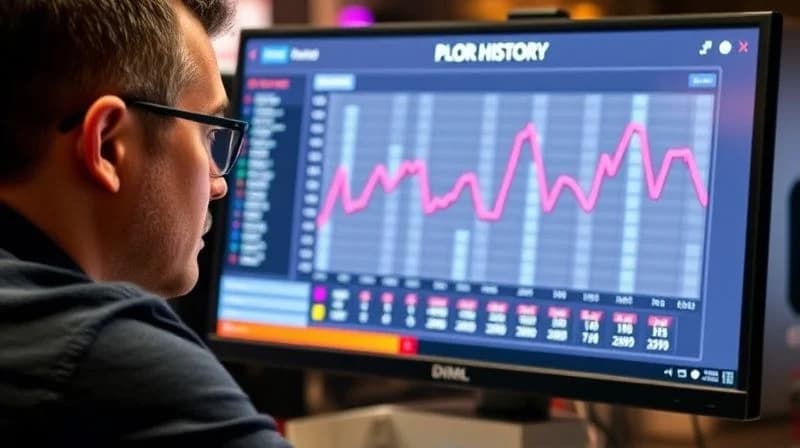
My Microstakes PLO Experience: A Picture That Sparked Thoughts
Reddit user vlee89 posted a picture titled 'My microstakes PLO experience so far', sparking community discussion about microstakes PLO games. Based on that post and common industry consensus, this article explores the characteristics and challenges of microstakes PLO.
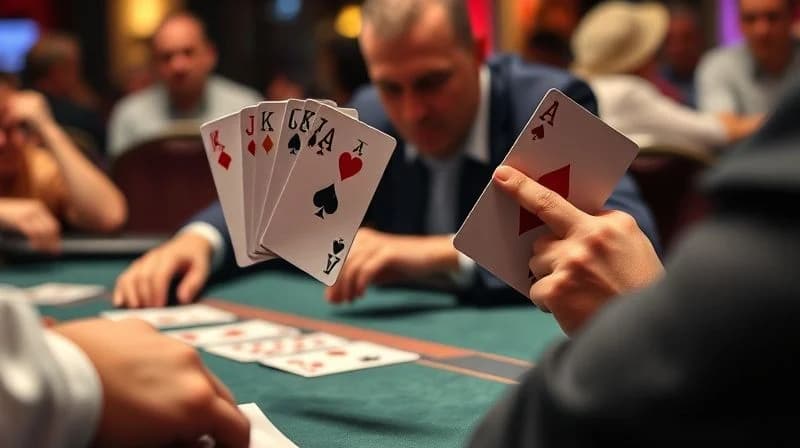
Live MTT Final Table Exit: How to Play This A7 Suited Hand?
Reddit poker player shares live MTT final table hand analysis: 8bb on the button shoves with Ac7c, gets called by opponent's bottom pair and busts. Community discusses whether a preflop shove is better and how to improve TAG strategy.

Small blind A5s all-in vs UTG 4-bet: GTO strategy and low-stakes adjustments
This article analyzes a common GTO strategy: when the small blind faces a UTG 4-bet, with A5s there is about a 51% probability of shoving all-in and 49% probability of calling. Why is that? This strategy is suitable for high-stakes games, but should you fold in NL2 or low-stakes live games? We will discuss from the perspectives of card blocking, range balancing, and level differences.

Facing an OMC's Cold 3-Bet and Calling Leads to a Multiway Pot, How to Respond?
A player encounters a rare situation in a $5/$5 cash game: an old man coffee OMC who has never 3-bet before makes a cold 3-bet preflop, and calling almost certainly results in a multiway pot. The article analyzes OMC's range characteristics and discusses reasonable settings for 4-bet, call, and fold ranges, taking into account postflop position and pot control.

Why Not Call Weak Hands vs 3-Bet Preflop?
In Texas Hold'em, calling weak hands against a 3-bet preflop is often a source of long-term losses. This article analyzes common calling mistakes, the underlying math, and better strategies like folding or 4-betting to help players avoid common pitfalls.

Kristen Foxen Pocket Kings Fold: Does GTO Support This Move?
In the 2024 WSOP Main Event, Kristen Foxen folded pocket kings preflop to an opponent's all-in, sparking heated debate in the poker community. This article analyzes whether the decision was reasonable from a GTO perspective and explores the balance between live reads and theoretical optimal strategy.

2026 ISOP Tournament: Dedoni Re Dominates Six-Max
According to the Italian Poker Club, at the 2026 ISOP Italian Poker Series, player Dedoni Re emerged victorious in the six-max event, winning the championship. The event attracted many top players, showcasing high-level competitive play.

3-Bet Line: Balancing Call and Re-raise Strategy
This article delves into the decision balance of the 3-bet line in Texas Hold'em, analyzing when to call and when to re-raise, and explains how to construct a balanced range that combines both value and bluffs, helping players avoid common mistakes and improve the long-term profitability of their preflop strategy.

Texas Hold'em Strongest Starting Hand AA: Preflop Strategies for Different Situations
This article provides a detailed analysis of the preflop strategy for AA, the strongest starting hand in Texas Hold'em, including definitions, mathematical principles, action recommendations for different scenarios, common mistakes, and practical examples to help players maximize the value of AA.

Satellite Early Stage Strategy: The Art of Balancing Survival and Accumulation
The core strategy of the early stage of satellite tournaments low blinds, deep stacks is to find a balance between survival and accumulation. This article explains definitions, ICM principles, practical examples, and common mistakes to help you improve your satellite tournament qualification rate.

Final Table Deep Stack Strategy
In the final table stage of a poker tournament, when stack depth exceeds 40BB, players need to shift from the conventional ICM tight-aggressive style to focusing more on value betting and range balancing. This article details preflop opening ranges under deep stacks, post-flop play, strategies against short stacks, and common misconceptions, helping you maximize profits with deep stacks at the final table.