77
Editor: dezhoupuke.orgRelated Glossary
MP
MP
MP Middle Position is the seat area in Texas Hold'em that comes after UTG and before the Cutoff CO, typically including…
Value Bet
Value Bet
A value bet is a bet that gets called by worse hands often enough to print. It is not any bet with a pair.
Pot Geometry
Pot Geometry
Pot Geometry is a bet sizing strategy that structures bets on earlier streets to enable an all-in bet on a later street…
ICM Jam
ICM Jam
An all-in push in a poker tournament where the decision is primarily driven by ICM considerations, typically involving …
Multiway Pot
Multiway Pot
A multiway pot is a poker hand in which three or more players are actively contesting the pot on a given street.
Condensed Range
Condensed Range
A range composed primarily of medium-strength hands with similar equity, lacking clear polarization between very strong…
No Limit Hold'em Starting Hands
No Limit Hold'em Starting Hands
Starting hands in No Limit Hold'em are the two hole cards dealt to each player before any community cards are revealed,…
Related Strategy
Preflop Open Raise Sizing: Position-Based Strategy
Preflop raise sizing is a fundamental yet critical decision in Texas Hold'em. This article explains how to adjust open raise amounts based on position from UTG to BTN and SB, balancing range construction and exploitative opportunities, and provides answers to common questions.
Exploitative Squeeze: How to Exploit Flat Callers' Weaknesses
This article explores how to adjust your squeeze strategy in Texas Hold'em to exploit opponents who flat call too often. It analyzes characteristics of flat calling ranges, adjustments to squeeze sizing and frequency, and key post-flop actions to help you maximize value in appropriate situations.
UTG Opening Range Guide
This article systematically explains the UTG under the gun opening hand ranges in 6-max no-limit Texas Hold'em, including standard ranges, adjustment factors, common mistakes, and practical advice to help you build a solid preflop strategy from the worst position.
K-High Flop C-Bet Strategy
This article delves into how to effectively make continuation bets cbet when the flop is a K-high board e.g., K-8-2 rainbow. It covers suitable hand ranges for cbetting, bet sizing, opponent type considerations, and later street plans, helping you maximize value and minimize losses on this common board texture.
Flop Betting Frequency Table: UTG vs BB Heads-Up Pot Strategy
This article uses the UTG vs BB heads-up pot as an example to construct a flop betting range and frequency table. It explains range construction logic, adjustment factors, and GTO references to help players make optimal decisions on common flops like J-T-2 rainbow.
Flop C-Bet Frequency Chart: UTG vs BB Single Raised Pot K72 Rainbow
Detailed explanation of GTO c-bet frequency for UTG vs BB single raised pot on K72 rainbow flop. Includes recommended ranges, construction logic, adjustment factors, and practical application to help players balance value and bluffs.
Hijack Steal and Re-steal: Positional Advantage and Practical Strategy
The hijack HJ is a strategically valuable position in Texas Hold'em. This article details how to effectively steal blinds from the HJ, as well as adjustment strategies when facing re-steals, including range construction, bet sizing, and responses to different opponents, helping players maximize positional advantage in the game.
Post-flop Range Advantage and Nut Advantage: Range Analysis with CO vs BTN Example
This article uses the example of CO opening and BTN calling on a flop of K♠9♥6♦ to explain how to leverage range advantage and nut advantage to construct a betting range. It covers position scenarios, recommended hand types, construction logic, adjustment factors, GTO references, and practical applications to help players maximize exploitation of opponents in advantageous situations.
Big Blind Defense Strategy: A Complete Guide to Countering Steals from Different Positions
This article provides a detailed analysis of strategies for the big blind when facing steals from different positions UTG to BTN, including calling ranges, 3-bet ranges, adjustment factors, and post-flop play, helping you minimize losses and profit in blind battles.
Flop Range Betting Frequency Table: CO vs BB on T-7-2 Rainbow Board
This article uses the example of a heads-up pot between CO and BB on a T-7-2 rainbow flop to detail the construction of a flop continuation betting c-bet frequency table. It covers GTO reference frequencies, hand range division value/bluff, adjustment factors, and practical applications to help players optimize their betting decisions in various exploitative scenarios.
Range Advantage and Nut Advantage: Strategy Application on Low Board Flops
This article uses a typical scenario where the button raises preflop and the big blind calls, with a low board flop e.g., 7♣5♥2♦, to analyze the conflict and utilization of range advantage and nut advantage. It provides GTO references and practical adjustment suggestions to help players optimize flop decisions.
Value Betting in Poker: How to Adjust Strategy to Win More
This article uses a specific hand (preflop flat call 77, flop check, turn bet, river T) to explain the logic of value betting. It emphasizes not relying solely on solvers but adjusting strategy based on opponent ranges and action logic. Suitable for intermediate to advanced players, helping them shift from GTO to practical thinking.
Related Players
' width='512' height='512'/%3E%3Ctext x='256' y='256' text-anchor='middle' dominant-baseline='central' font-family='system-ui,sans-serif' font-size='240' font-weight='bold' fill='hsl(81,30%25,85%25)'%3EAB%3C/text%3E%3C/svg%3E)
Andrew Brown
 United States
Andrew Brown is an American professional poker player with career live tournament earnings exceeding $1.5 million. He has recorded 77 cashes, with his most recent cash coming in July 2025. Known for a steady, disciplined approach, Brown has built a reputation for consistent results across major series.
' width='512' height='512'/%3E%3Ctext x='256' y='256' text-anchor='middle' dominant-baseline='central' font-family='system-ui,sans-serif' font-size='240' font-weight='bold' fill='hsl(94,30%25,85%25)'%3EJC%3C/text%3E%3C/svg%3E)
Jose Carlo Paz Gutierrez
 Bolivia
Jose Carlo Paz Gutierrez is a professional poker player from Bolivia, recognized as a pioneer for his country on the international stage. He has amassed over $469,000 in live tournament earnings, highlighted by a third-place finish in the 2021 WSOP $10,000 Seven Card Stud Championship for $77,227.
' width='512' height='512'/%3E%3Ctext x='256' y='256' text-anchor='middle' dominant-baseline='central' font-family='system-ui,sans-serif' font-size='240' font-weight='bold' fill='hsl(291,30%25,85%25)'%3EET%3C/text%3E%3C/svg%3E)
Eemil Tuominen
 Finland
Eemil Tuominen is a Finnish professional poker player with more than $633,000 in lifetime tournament earnings, built primarily through consistent results in live events. He has recorded 77 career cashes, with his most recent cash coming in July 2026. Tuominen is recognized as one of Finland's most active and successful tournament grinders.
' width='512' height='512'/%3E%3Ctext x='256' y='256' text-anchor='middle' dominant-baseline='central' font-family='system-ui,sans-serif' font-size='240' font-weight='bold' fill='hsl(34,30%25,85%25)'%3EAT%3C/text%3E%3C/svg%3E)
Anton Thorarinsson
 Iceland
Anton Thorarinsson, an Icelandic professional poker player, world ranking 38855, total earnings $77,129. Known for his solid play, he has achieved multiple results in small to medium-sized events.
' width='512' height='512'/%3E%3Ctext x='256' y='256' text-anchor='middle' dominant-baseline='central' font-family='system-ui,sans-serif' font-size='240' font-weight='bold' fill='hsl(309,30%25,85%25)'%3ECH%3C/text%3E%3C/svg%3E)
Che Hung Lin
 Taiwan
Che Hung Lin, Taiwan poker player, world ranking 38447, career total prize money approximately $77,989. Known for stable performance in international events and unique style, has certain visibility in Taiwan poker circle.
' width='512' height='512'/%3E%3Ctext x='256' y='256' text-anchor='middle' dominant-baseline='central' font-family='system-ui,sans-serif' font-size='240' font-weight='bold' fill='hsl(154,30%25,85%25)'%3EHA%3C/text%3E%3C/svg%3E)
Harrison Ashdown
United States
Harrison Ashdown is an American professional poker player with career live earnings exceeding $754,000 and 77 recorded cashes. Known for a steady, disciplined approach, he has consistently performed across live tournaments, with his most recent cash in September 2024.
' width='512' height='512'/%3E%3Ctext x='256' y='256' text-anchor='middle' dominant-baseline='central' font-family='system-ui,sans-serif' font-size='240' font-weight='bold' fill='hsl(188,30%25,85%25)'%3EHS%3C/text%3E%3C/svg%3E)
Harvey Scholl
United States
Harvey Scholl, American poker player, world rank 38513, total earnings $77,838, achieved results in multiple tournaments with a solid playing style.
' width='512' height='512'/%3E%3Ctext x='256' y='256' text-anchor='middle' dominant-baseline='central' font-family='system-ui,sans-serif' font-size='240' font-weight='bold' fill='hsl(289,30%25,85%25)'%3EJF%3C/text%3E%3C/svg%3E)
Jacob Frank
United States
Jacob Frank, American poker player, world ranking 38570, total earnings $77,743. Although not a top superstar, he has cashed many times in tournaments with consistent performance.
Related News
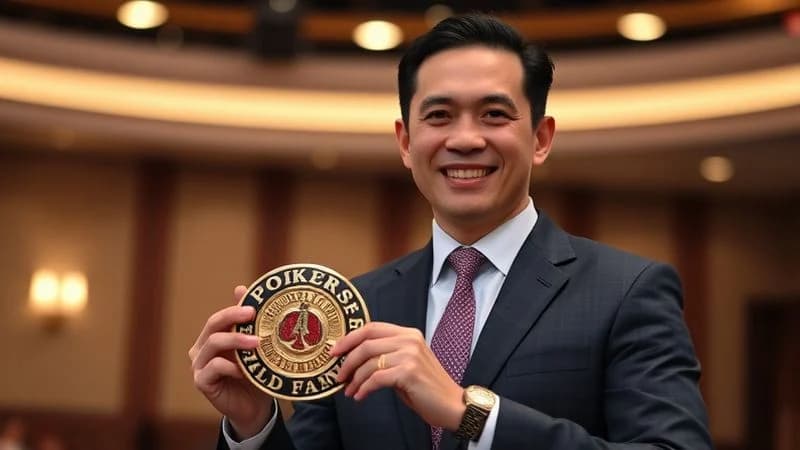
Jason Koon Inducted into Poker Hall of Fame as Sole 2026 Inductee
Two-time WSOP bracelet winner Jason Koon becomes the lone 2026 Poker Hall of Fame inductee, earning first-ballot honors with over $77 million in live earnings.

Facing a Raise on the River, Should KQ Bluff Catch? - 1/3 Hand Analysis
A Reddit user shares a 1/3 cash game hand: Hero in BB calls with KQo, flop J-K-6 checks, turn bets 15, river bets 15 then faces a raise to 50. Should Hero call? This article analyzes opponent's range and Hero's decision.
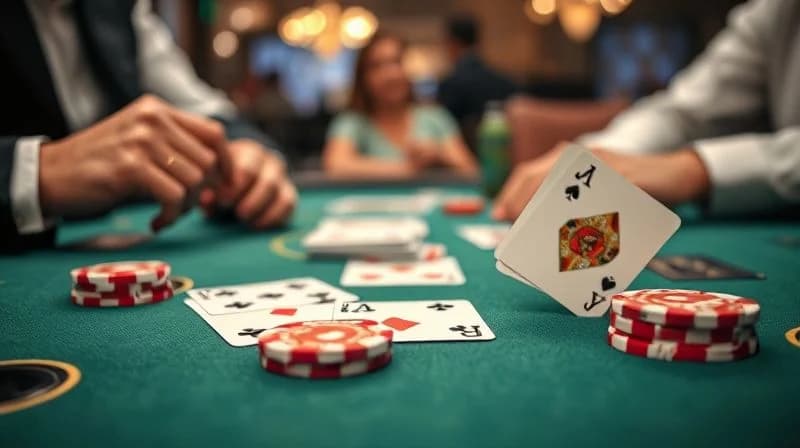
JQ suited flop check, river jam caught by full house, was this hand a mistake?
A player in a 1/3 no-limit hold'em cash game, holding JQ suited, raised on the button. Flopped a flush draw and checked. Turned top pair, rivered trips. Facing a large bet, the player jammed, only to be snap-called by opponent's 77 full house. This article reviews the key decision errors in the hand.

Flopped a Set Then Reversed: How to Avoid Burning Chips with 99 on a Flush Draw Board?
A player flopped a set with 99 in a $0.25/$0.50 game, but facing a possible flush draw, he chose an aggressive bet, eventually losing to opponent's flush on the river. This article reviews the decisions on each street and analyzes adjustment suggestions: flop 3bet sizing, turn choice, value of river fold.
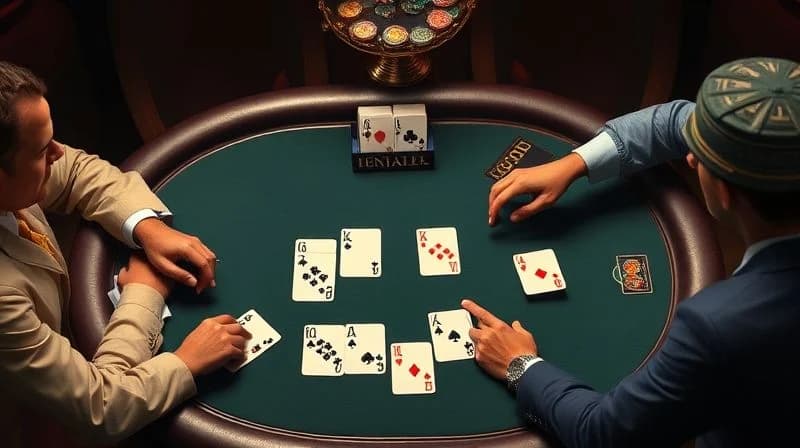
Luckiest Flop Ever? Reddit User Shares Insane Hand
A Reddit user shared a hand: BB shoves, hero calls, HJ also calls. The flop gives hero the nuts, dubbed the 'luckiest flop ever.' This article analyzes the probability of this rare hand and the fun discussion in the poker community.

Facing an OMC's Cold 3-Bet and Calling Leads to a Multiway Pot, How to Respond?
A player encounters a rare situation in a $5/$5 cash game: an old man coffee OMC who has never 3-bet before makes a cold 3-bet preflop, and calling almost certainly results in a multiway pot. The article analyzes OMC's range characteristics and discusses reasonable settings for 4-bet, call, and fold ranges, taking into account postflop position and pot control.
This hand helped him win the EPT Paris Main Event, but was the play perfect?
A key hand on the final table of the EPT Paris Main Event decided the champion. This article recreates the hand process and analyzes from a GTO perspective whether there was a better play, providing strategic reference for poker enthusiasts.

Paired Board Complete Strategy Guide
In-depth analysis of the definition, principles, and strategy adjustments for preflop, flop, turn, and river on paired boards, covering real-world examples and common misconceptions to help you make optimal decisions when the board pairs.

Call and Bet Frequency on Two-tone Boards
Two-tone board is a flop with two cards of the same suit, which significantly impacts player strategy. This article explains its definition, principles, practical strategies, and common misconceptions to help players optimize their call and bet frequencies.

Texas Hold'em Combinatorics: Accurately Calculating Opponent Hand Ranges
Combinatorics is a core tool for quantifying the likelihood of an opponent's hand in Texas Hold'em. Starting from the definition, this article explains combinatorics principles, practical calculation examples, and common misconceptions to help you read hands and make decisions more accurately.

UTG Opening Range Construction: Correct Choices for the Tightest Position
UTG Under the Gun is the most disadvantageous position preflop. Constructing a reasonable opening range is key to avoiding big mistakes. This article starts with definitions and principles, provides typical range examples, analyzes common misconceptions, and helps you master the correct strategy for the tight position.

Early Stage Hyper Turbo Tournament Strategy
The early stages of Hyper Turbo tournaments require aggressive strategies due to extremely high blinds and shallow stack depths. This article explains definitions, principles, practical examples, and common misconceptions to help you quickly accumulate chips.
Related
UTG Opening Range Guide
This article systematically explains the UTG under the gun opening hand ranges in 6-max no-limit Texas Hold'em, includi…
StrategyK-High Flop C-Bet Strategy
This article delves into how to effectively make continuation bets cbet when the flop is a K-high board e.g., K-8-2 rai…
StrategyFlop C-Bet Frequency Chart: UTG vs BB Single Raised Pot K72 Rainbow
Detailed explanation of GTO c-bet frequency for UTG vs BB single raised pot on K72 rainbow flop. Includes recommended r…
PlayersEemil Tuominen
Eemil Tuominen is a Finnish professional poker player with more than $633,000 in lifetime tournament earnings, built pr…
NewsJQ suited flop check, river jam caught by full house, was this hand a mistake?
A player in a 1/3 no-limit hold'em cash game, holding JQ suited, raised on the button. Flopped a flush draw and checked…
NewsFacing an OMC's Cold 3-Bet and Calling Leads to a Multiway Pot, How to Respond?
A player encounters a rare situation in a $5/$5 cash game: an old man coffee OMC who has never 3-bet before makes a col…
StrategyRange Advantage and Nut Advantage: Strategy Application on Low Board Flops
This article uses a typical scenario where the button raises preflop and the big blind calls, with a low board flop e.g…
StrategyValue Betting in Poker: How to Adjust Strategy to Win More
This article uses a specific hand (preflop flat call 77, flop check, turn bet, river T) to explain the logic of value b…